SCAM artist alert

Apparently there is someone calling himself "Luigi Calloway" out there who is claiming to be associated with the Mount TBR Reading Challenge. He is contacting authors and telling them if they pay him, then their books will be used for the challenge. It's possible he's also telling people they must pay to participate in any way. Please know that there is absolutely no charge associated in any way with this reading challenge and that this person does NOT represent me or anything associated with my blog. I DO NOT endorse anything that he claims.There will NEVER be a reason for anyone to have to pay for participation in any way for any of my challenges. If only people who exert this much time and effort on scamming people would put it into something worthwhile....like reading their own books! A message to Luigi: Please cease and desist contacting authors (or anyone) in my name or claiming to represent this reading challenge. You absolutely DO NOT.

Monday, August 13, 2012

Sense & Sensibility: Review

It may well be that the best of Jane Austen is behind me.  I loved Persuasion--that for me is Austen's best work so far.  I also thoroughly enjoyed Love & Friendship.  Next in line, Northanger Abbey and Pride & Prejudice....in that order.  I actively dislike Emma.  And now, Sense & Sensibility....well, it's better than Emma.  At least I can say that.  It's obvious to me that S&S is Austen's first book--even without knowing that beforehand. (*My mistake--as Adam points out below--her first published novel.)  She seems to be searching for her style and voice.  She's quite good at most of the characterizations...giving us Mrs. Jennings to amuse us and Willoughby and Lucy Steele and the John Dashwoods to annoy and vex us.  There are hints of her wit and stunning social commentary.  But overall the story seemed to drag on so.  It would have been even worse if I had actually read the whole thing--but I was helped out immensely by a sudden urge to travel to Chicago this past weekend.  I stopped by the local library, picked up a CD version, and let Wanda McCaddon read to a captive audience of one for 8-9 hours.  Her terrific reading of the novel and interpretation of the characters did wonders for me (and upped the star rating a bit).

Unfortunately, Edward Ferrars is one of biggest drips in romantic hero history.  I'm not terribly convinced of all the virtues that Elinor finds in him.  Of course, pretty much everything we're told about the man comes second-hand.  We don't see him up close and personal or in conversation with Elinor (or anyone else for that matter) much. It's difficult to see him as a viable character.  We get far more insight into the character of Willoughby than we do of Edward--not that Willoughby's character is one I really want to know.  From what we actually see of the man, I certainly can see no reason why he might make Elinor's heart flutter.  Perhaps I would understand it better if we were actually given the chance to see these two interact more (more than the stiff, formal visitations when Edward is engaged to someone else).

I also find it highly unsatisfactory that Robert Ferrars and that snake Lucy wind up back in the good graces of Mrs. Ferrars.  If we're going to tie up all the ends in a happily-ever-after sort of fashion--marrying people off right and left at the end and making everyone who deserves to be happy, happy--then by all means, let's also give the despicable characters a bit of what's coming to them as well.  But, I suppose, one can't have everything.  And, as I've already mentioned, this was Austen's first published book.  She had time to improve her narrative abilities and find a way to make the reader (this reader, anyway) more engaged with her characters.  Three stars--one whole star for a lovely reading performance on audionovel.

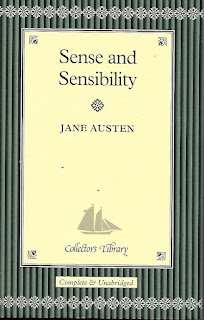
One might argue that the boring cover on my edition of this novel influenced my reading.


Sunday, August 12, 2012

Gold Medal in Synchronized Reading

The 2012 Olympics came to an end today and throughout the duration of the Olympic Games Random House of Canada  was hosting a reading challenge for those of us who had Olympic-size TBR piles to conquer!
OlympicMedals2

I, of course, had a HUGE TBR pile (think of a whole mountain range of Everests), so I gladly signed up for the Olympic Reading Trials! I made the team and set my sights on a goal of 1500 pages. Read-a-thons throughout the year had helped me train for this event and soon I was off and running. Today, when I looked at the final scores, I found that I had exceeded my goal by 311 pages!  A gold medal--plus!

You can look here and see how all the Reading Athletes have placed in the 2012 Olympic Reading Games.
Thanks to Michelle at The True Book Addict for bringing this one to my attention!


Reading List:
1. Murder at the Portland Variety by M. J. Zellnik (317 pages) [Complete 7/29/12]
2. Surprised by Joy by C. S. Lewis (238 pages) [Complete 7/31/12] 
3. Sense & Sensibility by Jane Austen (307 pages so far) 
4. The Key by Patricia Wentworth (236 pages) [Complete 8/5/12]
5. Mysterious Incidents at Lone Rock by Rajendra Pillai (248 pages) [8/6/12] 
6. Gideon's Month by J. J. Marric (158 pages) [8/7/12]
7. The Anatomy of Death  by Felicity Young (307 pages) [8/10/12]

The Anatomy of Death: Review

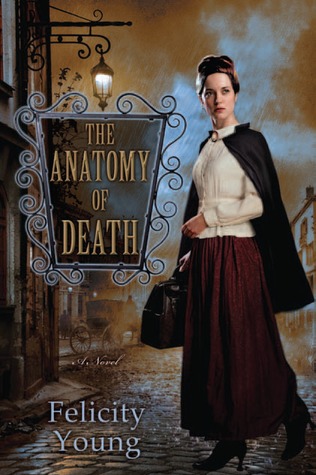
The Anatomy of Death is the first in a new series by Felicity Young.  It features Dorothy (Dody) McCleland, a young woman who has gone into the medical field at the turn of the twentieth century.  Denied the chance to become a surgeon for the living (because of her sex), she trains as an autopsy surgeon and becomes England's first female doctor of this type.  She has just returned to London from her studies in Scotland--all set to take up her post as an assistant to Bernard Spilsbury--Scotland Yard's autopsy surgeon--and is greeted at the train station with a note calling her to her very first case.  The Superintendent of Police is none too pleased to find that his new "man" is a female surgeon, but Spilsbury is out of town and unavailable, so he lays the facts before her.

What started as a peaceful protest in support of voting rights for women turned very ugly indeed when roughs and toughs from the dock area were incited to assault the marchers.  Three women are struck down in the violent attack--including one of the prominent suffragettes.  Dody must excuse herself from the autopsy because the woman, Lady Catherine Cartwright, was a friend of her sister.  However, when it is rumored that the death was actually from police brutality and it seems that the incident is going to be swept under the carpet, Dody begins working on her own to determine whether the rumors are true.  She earns the trust of Chief Inspector Pike--who has his own reasons for looking into the events of that day--and the two of them gather clues to determine whether a police officer let his emotions get the better of him or if the killer is closer to home.

This is an interesting start to a very promising historical series.  The time period is an intriguing one--right at the turn of the century and watching the fight for women's rights.  There are so many things that women today take for granted now that were just being thought of and fought for.  Dody is a pretty strong character--although it is evident that there is much room for growth.  I thoroughly enjoyed getting to know her and look forward to future installments.  I found her and the other central characters believable and interesting.  The mystery itself had a nice twist and it was pretty fairly clued.  A solid opening and worth three stars.

[Unfortunately, I wasn't able to write up this review as soon as I finished the book (8/10/12)--I had to run away and play in Chicago this weekend--so it's a bit shorter than usual.]

Thursday, August 9, 2012

Booking Through Thursday: Branching Out

A weekly meme about (mostly) books and reading. Hosted at Booking Through Thursday. A while ago BTT interviewed their readers for a change, and their final question was, “What question have they NOT asked at BTT that you’d love them to ask?” Ever so often they will pose those questions to their BTT followers. Like now.  Amy & Sarah both ask about genres:
 
Amy asks: Name a book you love in a genre you normally don't care for.  What made you decided to read it?  Did it make you want to try more in that genre?

Soulless (and the rest of the Gail Carriger Parasol Protectorate series).   I found Carriger's books mentioned on another blog site (Adventure Into Romance) and it sounded so good, I just had to run right out to the library and grab the first two of the series.  It did make me read everyone of these paranormal/steam punk adventures.  It hasn't really made me go crazy for paranormal/steam punk, though.

And Bookish Sarah asks:  What genre do you avoid reading and why?

For the most part, I avoid horror, true crime and true disaster stories, thriller/psychological thrillers, and children-in-danger stories (particularly more modern, more graphic).  Why?  I feel like there's enough drama, horror and nastiness in modern life--I read to escape.  If I'm going to wind up reading stories that will only remind me of today's headlines or make me have nightmares, then I might as well read the newspaper.  And I cannot take stories that involve the abuse or murder of children.  Can't do it.

Theme Thursday: Mirror, Mirror on the Wall


Hosted by Reading Between the Pages

Rules
  • A theme will be posted each week (on Thursday’s)
  • Select a conversation/snippet/sentence from the current book you are reading
  • Mention the author and the title of the book along with your post
  • It is important that the theme is conveyed in the sentence (you don’t necessarily need to have the word)
*Link back to Reading Between the Pages

And this week's theme is Mirror.  Here is mine from The Anatomy of Death by Felicity Young (p. 191):


Dody glanced at her reflection in the hall mirror. "Oh, what a mess, I see what you mean." It wasn't the flying tendrils of hair--they were fairly normal after a busy day at the hospital--it was the red-rimmed eyes betraying her tearful journey home from Olivia's flat.


Wednesday, August 8, 2012

Challenge Complete: What's in a Name 5

Beth of BethFishReads hosted another round of the What's in a Name Challenge this year and I have just finished the course.  She comes up with six categories and it's up to us to find books that fit.  In fact, she urges us to get creative when choosing books to fit her themes.  Here are this year's categories and the books I read to complete the challenge:

  1. A book with a topographical feature (land formation) in the title: Black Hills, Purgatory Ridge, Emily of Deep Valley
  2. A book with something you'd see in the sky in the title: Moon Called, Seeing Stars, Cloud Atlas
  3. A book with a creepy crawly in the title: Little Bee, Spider Bones, The Witches of Worm
  4. A book with a type of house in the title: The Glass Castle, The Girl Who Kicked the Hornet's Nest, Ape House
  5. A book with something you'd carry in your pocket, purse, or backpack in the title: Sarah's Key, The Scarlet Letter, Devlin Diary
  6. A book with a something you'd find on a calendar in the title: Day of the Jackal, Elegy for April, Freaky Friday, Year of Magical Thinking

Here are my picks:
1. Topigraphical Feature: The Mysterious Incident at Lone Rock
by Rajendra Pillai (8/6/12)
2. Something in the Sky: From Sawdust to Stardust: The Biography of DeForest Kelley, Star Trek's Dr. McCoy by Terry Lee Rioux (3/14/12)
3. Creepy Crawly: The Golden Scorpion by Sax Rohmer (4/2/12)
4. Type of House: The House of A Thousand Candles
by Meredith Nicholson (6/17/12)
5. Something in pocket, purse, backpack: The Key by Patricia Wentworth (8/5/12)
6. On a Calendar: Gideon's Month by J. J. Marric (8/8/12)

Gideon's Month: Review

As the title indicates Gideon's Month by J. J. Marric (aka John Creasey) covers a month's work of work for Commander George Gideon's and the policemen who with and for him.  The month's caseload includes everything from a housekeeper who knocks off elderly men faster than the sisters in Arsenic & Old Lace to a pickpocket "school" that trains children of 6-8 years of age to lift billfolds with all the dexterity of a horde of young Houdinis.  There are young women with new husbands plotting their demise, a missing child, and the murder of underworld criminal who had purportedly gone straight--but Gideon's not buying it.  Especially since the widow is too frightened to talk about what really happened.  Gideon and his men manage to solve each of these cases before the month is out.

As I mentioned in my previous Marric read, I read a couple of installments of this police procedural series early in my mystery-reading career and remember liking them.  However, these last two (Gideon's Power and now Gideon's Month) haven't gone down quite as well. I realize that a policeman's lot is a very busy one and that real life does not allow the police to focus on only one crime at a time--but trying to realistically represent the day--or week--or month of a policeman in a very short paperback novel (169 pages this time round) produces a very scattered and yet cluttered effect. Few of the crimes get the attention they deserve and very little of the actual detecting gets recounted.  For the most part Marric is telling us all about it rather than letting Gideon and his colleagues show us.  Gideon goes in to the office....various phones ring and in the conversations we learn the details.  There isn't much footwork and spadework going on before our eyes.  It's not quite...but almost...like reading the police reports.  Not very exciting stuff.  And then...the most attention is devoted to the story of one of the children who has been pressed into pickpocket service by his mother.  Reading the details of that abusive relationship certainly didn't increase the book's appeal for me.  Fortunately, since the book is over 50 years old, those details aren't quite as graphic as they might be in a more modern novel.  I can do without child-endangerment stories.  Two stars.


Tuesday, August 7, 2012

Top Ten Tuesday: It's All About Me!


Top Ten Tuesday is an original bookish meme hosted by The Broke and the Bookish. Each week a new top ten topic is posted for followers to write about. This week we are asked to list our Top Ten posts that give the best glimpse of ourselves.  These should give a pretty good idea of who I am


Book Surveys & Whatnot:


General About Me Stuff
1. Shining Star post on CMash's old blog

My Book/Reading Obsession:
1. Red Cross Book Sale -- A Two-Part Tale (can't pass up a book sale....especially not one this big)
3. Challenge Addiction: Hi, my name is Bev...and I'm a reading challenge addict.


Monday, August 6, 2012

Mysterious Incidents at Lone Rock: Review

"A murder--it is like a math problem, you see." ~Chinni Roy

In Mysterious Incidents at Lone Rock by Rajendra Pillai, Chinni Roy, a visiting scholar and former police detective from India, gets the chance to prove his theories about murder.  He and his host, Professor Rich Harrison, are invited to spend a "relaxing" weekend in the country at the home of the university's Dean, Roberta Glasson.  Roberta is a long-time friend of Harrison's and has arranged a house party at her estate, Lone Rock.  Included in the party are other friends of Roberta's as well as Sir Melvin and Lady Martha Ellington--British diplomats.  Sir Melvin is a strongly (and adversely) opinionated man whose colonial outlook and abrasive comments soon manage to offend just about everyone in the house party.  

A snow storm hits and before the first night is over, Lady Martha will confide to Rich and Roy that she believes her husband is trying to poison her.  Later that same night, a gunshot rings out.  Sir Melvin is dead and Lady Martha is standing over him with the gun in her hand.  Did she shoot in self-defense?  Or should they believe her story of an intruder who thrust the gun into her hand as she stood dazed?  The police are called in and Chinni begins constructing his math problem--lining up the facts and the variables in neat, orderly algebraic formulas.  But can a detective really solve for Y and come up with Mr. or Ms. X?  And what if there are too many variables to allow for a sensible solution?

Pillai's book is quite a mix--a Christian cozy with academic overtones.  No violence onstage and no strong language or gore.  The setting and the set-up show strong influences from Agatha Christie--from the snowbound house party to the foreign detective insisting on order and method.  Not quite emphasizing the working of the "little grey cells," but the echoes are definitely there.  And Harrison most assuredly plays the part of Captain Hastings or Watson to the detective.  Never quite seeing all there is to be seen and offering up solutions of his own that aren't quite right.  There are plenty of red herrings and twist and turns to satisfy the fans of Golden-Age-style mysteries.  It looks (from my brief researches on the internet) that this book (pub. 2008) is the author's only foray into the mystery genre.  That's a shame.  This is a good solid outing and the character of Chinni has great promise.  I would have enjoyed seeing a series and the development of the detective.  Three stars for a very nice debut mystery.


It's Monday! What Are You Reading?

It's Monday! What Are You Reading? is a bookish meme hosted by Book Journey. It's where we gather to share what we have read this past week and what we plan to read this week. It's a great way to network with other bloggers, see some wonderful blogs, and put new titles on your reading list. So hop on over via the link above and join in...and leave a comment here so I can check out what you are reading.
 

Books Read (click on titles for review):
Surprised by Joy by C. S. Lewis
The Key by Patricia Wentworth


Currently Reading:  
Sense & Sensibility by Jane Austen features two very different sisters who share a troubled, impoverished family background. Elinor Dashwood is practical and disciplined, Marianne capricious and emotional; both must struggle to achieve happiness in a society where men predominate and where they must balance emotional needs against financial realities. A powerful drama of family life, a chronicle of romantic misfortunes, narrated with irony and a sharp eye for hypocrisy, as well as a striking critique of early nineteenth-century society.
 
Books that spark my interest:
The Anatomy of Death by Felicity Young
A Stranger in My Grave by Margaret Millar
Some Danger Involved by Will Thomas 


Sunday, August 5, 2012

The Key: Review

It's the 1940s.  World War II is raging and a Jewish refugee in England is working on a substance that could give Britain an edge in the war.  Michael Harsch has worked for years trying to perfect his work and now he's finally ready to turn it over to the War Office.  He calls Sir George Rendal to let him know of the success and makes arrangements to turn his findings and all his notes over the next day.  It's an appointment that he'll never keep.  Harsch goes to the church to relax with music and is later found dead beside the organ. And a German pistol is found beside him. The door is locked and key is in his pocket.  There are other keys--but they all seem to be accounted for.  A coroner's jury brings in a verdict of "suicide while the balance of his mind was disturbed."  But Harsch's friends don't believe it and Janice Meade calls in Miss Maud Silver to find out the truth.  Miss Silver's years as a governess have given her plenty of insight into human nature--a skill that she turns to her advantage as a private detective.

While it is true that Patricia Wentworth's Miss Silver mysteries tend to run on a certain formula--someone dies; either it's mistakenly called suicide or an innocent person is fingered as the culprit (sometimes both happen in quick succession in the same story); former client or former charge of the governess suggests bringing in Miss Silver; there is a young romantic couple (or two) who need things straightened out so they can live happily ever after; and the police repeatedly go down blind alleys while Miss Silver whips clues out of her knitting bag faster than she can knit one of her endless supply of socks, baby layettes, etc.--she has a knack of description and a grasp of character that make each outing seem fresh and new.  She also has quite few tricks in her own bag.  I changed my mind repeatedly on who the culprit was and just barely managed to settle on the correct one before Miss Silver did.  It's always pleasant to be fooled for most of the book and then edge out the detective by a nose at the finish line.

This particular outing begins like a spy thriller--and there is always the possibility of enemy agents seeking to gain control of Harsch's discovery--but Wentworth never really takes us out of the cozy realm.  The events are firmly lodged in the typical British villages with all the trappings and Miss Silver plays the part of the talkative older lady to the hilt.  It's amazing how she shrewdly leads witnesses to produce evidence that the police would never be able to pry out of them with a crowbar.  I thoroughly enjoyed my visit to war-era Britain.  A satisfying read and nicely plotted mystery for four stars.

Quotes: 
You know, when there has been what you might call a tragedy--when you have lost someone, not in the ordinary way of death but in some way that puts fear into the imagination--it becomes so difficult to talk about the one that you have lost. There is too much sympathy--it makes an awkwardness. [Michael Harsch] (p. 8)

She had much love given to her, and if at the end there was pain, I do not believe that it could blot out the happiness.... [Michael Harsch] (p. 8)

Miss Perry, her name was, and she could do all sorts of entertaining things--telling fortunes from cards, and writing with planchette. All great nonsense of course, or I used to think it was, but really very entertaining. You know, you do get tired of knitting, and the libraries always seem to have so many books that no one could want to read. [Miss Sophy] (p. 21)

Garth burst out laughing. Aunt Sophy had a shrewd streak which sometimes showed quite unexpectedly. (p. 21)

...I'm so fond of her--don't you think it is very difficult to describe people when you are fond of them? [Miss Sophy] (p. 24)

He didn't like the way in which the old dear had come by Miss Medora Brown. Coffee grounds and cards are not really a substitute for first-class references. (p. 32)

MS: I like Miss Mottram. She is always so pleasant.
MD: She hasn't the brain of a hen.
MS: Perhaps not--but there are such a lot of clever people and so few pleasant ones. [Miss Sophy; Miss Doncaster] (p. 59)

They stood still for a moment. There was at once too much and too little to say, and none of it could be said within earshot of half the village streaming home. (p. 60)

But, Janice, don't you see that when something pushes a man off his balance, that' s just what he does do--he acts out of character. It isn't normal for a man to pitch on his head or go down on his hands and knees, but if his physical balance is upset, it may happen. And when it comes to mental balance, well, it's the same thing, isn't it? Normal motives and restraints cease to operate, and he does the last thing he would dream of doing if he were himself. [Garth Albany] (p. 65)

If men knew how very foolish they appear when they allow a silly young woman to twist them round her little finger, it would at any rate preserve them from exposing themselves to ridicule in company. [Miss Doncaster] (p. 77)

Poor dear Medora! And she won't tell me anything--not anything at all. She doesn't even cry. You know, it really does you a great deal of good to cry when you are feeling unhappy. [Miss Sophy] (109)

And what call have you got to go bringing down the London police after that? Let them stay at home and mind their own murders, I say, and not come ferreting and worriting where nobody wants them. [Mrs. Bush] (134)

...you know what men are--it's no good talking , they just go their own way. [Mrs. Bush] (136)

Very correct--aren't you? When you start saying sir every time you open your mouth, I begin to look out for what you've been up to. [Chief Inspector Lamb] (139)

When something has happened it is no use trying to remain in the past, or to refuse to accept what the present demands of us. [Miss Silver] (142)

Miss Silver looked at him reprovingly. Her manner indicated that discourtesy relegated one mentally and morally to either the nursery or the slum. (196)


Friday, August 3, 2012

Crime Fiction Alphabet: Letter K


I have signed up for a second year of The Alphabet in Crime Fiction, a community meme sponsored by Mysteries in Paradise. Each week she'll be expecting participants to produce a post featuring a mystery/crime novel or novelist related to that week's letter. 

Okay....somehow I got separated from the tour group and totally missed the letter J.  I'm not entirely sure what happened there.  But I've made a mad dash to catch up....and am ready to submit an entry for the letter K.

K is for Key.  That is The Key by Patricia Wentworth.  This mystery novel was first published in 1944 and is the eighth book in the series starring Miss Maud Silver. Miss Silver is a retired governess whose insight into hearts of children has given her the tools necessary to take up a late-life career as a private detective.  Her cases usually take her into the upper classes--often she finds herself helping out previous pupils or relations of such.  She also works closely with Scotland Yard Inspector Frank Abbott who has a great deal of affection and respect for her.  These are delightful cozy mysteries that remind me of Christie's Miss Marple. 

I have just started reading The Key, so I have no review to offer.  But I will give you the synopses from Goodreads and the back of the book:

Michael Harsch's long years of work were nearly at an end. The following day he was looking forward to handing over his precious formula to the government. But the next morning he was in no fit state to hand over the formula - he was dead.  He is discovered in the church with the door locked and the key in his pocket.  Of course the rector has a key, as do the sexton and the organist.  But it seems that those are all accounted for.  It looked like suicide, but Miss Silver knew it was murder.

Wednesday, August 1, 2012

Challenge Complete: Birth Year Challenge--Honors

For the third year in a row Hotchpot Cafe is sponsoring the wonderful Birth Year Reading Challenge. My favorite reading challenge.  This year, in addition to the regular option to read books from our own birth year, we were offered the chance to select the birth year of someone special that we would like to honor.


I jumped in w
ith both feet--'cause, you see, I had two people that I'd like to honor. And they both have some pretty good books that just happen to have been hanging out on my TBR list for a while.  [I really wanted to do honor to three people--Sorry, Dad, but the list of books for your year didn't do a whole lot for me.]  My commitment was for four books for each of my honorees.

First, up 1947. This is the year of Gloria, my mom. Not only is my mom totally great and deserving of the honor just for being a wonderful mom--but she also gets the credit for introducing me to Nancy Drew and starting me on my long love affair with the written word in general and mysteries in particular. Mom gave me her set of 5-6 Nancy Drew books that had been a Christmas gift from her mom back in the '50s and I never looked back. I'm not sure that Mom realized that she was creating such a dedicated biblioholic when she did that.....

Books read from 1947:

1. The Clue in the Old Album by Carolyn Keene (3/22/12)
2. Full Moon by P. G. Wodehouse (3/23/12)
3. New Graves at Great Norne by Henry Wade (5/31/12)
4. Swan Song by Edmund Crispin (4/3/12)


My second honoree burst onto the scene in 1955. Richard is a dear friend who gets the credit for my most recent obsession--book blogging. Again, I'm not sure he knew what he was doing when he told me about his blog (animal/picture-oriented), but had I not checked out his blog and also his daughter's and moved from there to discovering a whole world of book blogging I don't think I'd be out here in the blogosphere today.

Books read from 1955
1. A Gift from the Sea by Anne Morrow Lindbergh (3/6/12)

2. Compartment K by Helen Reilly (7/15/12)
3. So Many Steps to Death by Agatha Christie (5/25/12)
4. Surprised by Joy by C. S. Lewis (7/31/12)


Commitment Complete: 7/31/12.  But still reading! J. G. is offering an overachiever prize....and, well, I am a bit of an overachiever.  Just a bit.


Surprised by Joy: Review

Finished C. S. Lewis's Suprised by Joy: The Shape of My Early Life yesterday.  The book gives us Lewis's life from his boyhood to his years at school and with a tutor in preparation for Oxford to (brief) vignettes about his World War I experiences to life as an undergraduate at Oxford.  It is also supposed to recount his journey from a fairly typical Christian childhood in Belfast to a period of atheism/agnosticism to his confident claiming of Christian joy for himself.  A BIG DEAL is made in the blurb on the back of the book about Lewis being the man who reasoned his way back to God.  I'd heard quite a bit about the book previously.  But quite honestly I am surprised at how Surprised by Joy isn't nearly as descriptive of Lewis's conversion as I expected.  Not that he doesn't mention it--repeatedly.  But, based on the evidence he supplies, I am unconvinced. And I'm a Christian myself.  Preaching to the choir here.

He casually mentions here that he was made to rethink his atheism because he read this or that book.  And then over there so-and-so came along, and, well, he wasn't a believer either...but what he said made Lewis think.  And then, hey, he read a few more books and was urged to think even more furiously about this whole Spirit/Joy/quite-possibly-God thing.  And, by golly, he was reminded of that JOY he felt once upon a time when his brother built a little play garden in a biscuit tin lid.   And he keeps on looking for that JOY.  And discovered it again when he came across the Norse mythologies.  He decides that the JOY is really desire and that desire is for what he calls Spirit.  He's not yet converted to Christianity, but he's on his way.  And then suddenly during his Oxford days he says he was on his way to Whipsnade and "When we set out I did not believe that Jesus Christ is the Son of God, and when we reached the zoo I did. Yet I had not exactly spent the journey in thought."  Poof!  He's a believer...in for the whole nine yards. A done deal.  But reasoning his way there?  Not according to his narrative.  I don't doubt Lewis's belief.  I've read enough of his other works that I know what he believes.  And he expounds it very well in those other works.  He can't help but exhibit it in his fiction.  But showing me how he got there in this spiritual autobiography? Not nearly so well--he doesn't lay out his reasoning in the same way that he discourses on the four loves (in the book of the same name), for instance.  For a reasoning man, he expects his reader to take a great deal on faith--to just believe that because he said he suddenly believed in God again, well, he did.

What I like most about this work is the intellectual autobiography. I enjoy his thoughts on books and reading and scholarship.  It was interesting to read about his schooling and his joy during the time he spent under Mr. Kirkpatrick's tutelage.  I would have liked to have learned more about his experiences in World War I.  And I just plain like the way Lewis writes.  He is straight forward and yet there is a rhythmic quality to the writing. There is subtle humor in the way he writes about the interactions between his father, brother, and himself--and I laughed out loud when he told the WWI story about the door coming off their railroad compartment.  I would have rated the book higher than the three stars I am giving it if it had been a straight autobiography and not pitched as such a blockbuster spiritual journey.

Quotes:
The Hamiltons were a cooler race. Their minds were critical and ironic and they had the talent for happiness in a high degree--went straight for it as experienced travelers go for the best seat in a train. (p. 3)

[about fears/phobias]
...I developed for a short time a genuinely scientific interest in insects. Other studies soon crowded it out but while my entomological period lasted my fear almost vanished, and I am inclined to think a real objective curiosity will usually have this cleansing effect. (p. 9)

The New House [had] endless books....There were books in the study, books in the drawing room, books in the cloak room, books (two deep) in the great bookcase on the landing, books in a bedroom, books piled as high as my shoulder in the cistern attic, books of all kinds reflecting every transient stage of my parents' interest, books readable and unreadable, books suitable for a child and books most emphatically not. Nothing was forbidden me. In the seemingly endless rainy afternoons I took volume after volume from the shelves. I had always the same certainty of finding a book that was new to me as a man who walks into a field has of finding a new blade of grass. Where all these books had been before we came to New House is a problem that never occurred to me until I began writing this paragraph. I have no idea of the answer. (p. 10)

I was driven to writing stories...little dreaming to what world of happiness I was being admitted. You can do more with a castle in a story than with the best cardboard castle that ever stood on a nursery table. (p. 12)

I set about writing a full history of Animal-Land. Though more than one version of this instructive work is extant, I never succeeded in bringing it down to modern times; centuries take a bit of filling when all the events have to come out of the historian's head. (p. 13)

[his father as a disciplinarian]
And my father's good qualities as well as his weaknesses incapacitated him for the task....He therefore relied wholly on his tongue as the instrument of domestic discipline. And here that fatal bent toward dramatization and rhetoric (I speak of it the more freely since I inherit it) produced a pathetic yet comic result. When he opened his mouth to reprove us he no doubt intended a short well-chosen appeal to our common sense and conscience. But alas, he had been a public speaker long before he became a father. He had for many years been a public prosecutor. Words came to him and intoxicated him as they came. (p. 38)

My poor father, while he spoke, forgot not only the offense, but the capacities of his audience. All the resources of his immense vocabulary were poured forth. I can still remember such words as "abominable," "sophisticated," and "surreptitious." You will not get the full flavor unless you know an angry Irishman's energy in explosive consonants and the rich growl of his r's. (p. 39)

[about his aunt]
In her also I found what I liked best--an unfailing, kindly welcome without a hint of sentimentality, unruffled good sense, the unobtrusive talent for making all things at all times as cheerful and as comfortable as circumstances allowed. (p. 43)

[on pretension]
To certain adults it seems obvious that he who claims not to know the Low must be pretending to be High. (p. 49)

[being a boy at an adult social event]
...there were not lacking adults who would egg me on with feigned seriousness--on and on till the moment at which I suddenly knew I was being laughed at. Then, of course, my mortification was intense; and after one or two such experiences I made it a rigid rule that at "social functions" (as I secretly called them) I must never on any account speak of any subject in which I felt the slightest interest nor in any words that naturally occurred to me. (p. 48)

No one is a coward at all points. (p. 55)

[about reading on train journeys]
Soon too we gave up the magazines; we made the discovery (some people never make it) that real books can be taken on a journey and that hours of golden reading can so be added to its other delights. (It is important to acquire early in life the power of reading sense wherever you happen to be.)  (pp. 56-7)

In the course of life I could put up with any amount of monotony far more patiently than even the smallest disturbance, bustle, or what the Scotch call kurfuffle.  Never at any age did I clamor to be amused; always and at all ages (where I dared) I hotly demanded not to be interrupted. (p. 117)

My father--but these words, at the head of a paragraph will carry the reader's mind inevitably to Tristram Shandy. On second thoughts I am content that they should. It is only in a Shandean spirit that my matter can be approached. I have to describe something as odd and whimsical as ever entered the brain of Sterne; and if I could, I would gladly lead you to the same affection for my father as you have for Tristram's. (p. 120)
Many thousands of people have had the experience of finding the first friend, and it is none the less a wonder; as great a wonder...as first love, or even a greater....Nothing I suspect is more astonishing in any man's life than the discovery that there do exist people very, very like himself. (p. 131)
 When a very dignified neighbor, in the course of a Sunday call, observed with an air of finality, "Well, well, Mr. Kirkpatrick, it takes all sorts to make a world. You are a Liberal and I am a Conservative; we naturally look at the facts from different angles," Kirk replied, "What do you mean? Are you asking me to picture Liberals and Conservatives playing peep-bo at a rectangular Fact from opposite sides of a table?" (pp. 137-8)
[about his tutor, Mr. Kirkpatrick]
Sometimes, but rarely, he was driven to irony. On such occasions his voice became even weightier than usual and only the distention of his nostrils betrayed the secret to those who knew him. It was in such fashion that he produced his dictum, "The Master of Balliol is one of the most important beings in the universe." (p. 138)

Walking and talking are two very great pleasures, but it is a mistake to combine them....The only friend to walk with is one who so exactly shares your taste for each mood of the countryside that a glance, a halt, or at most a nudge, is enough to assure us that the pleasure is shared. (p. 142)

...eating and reading are two pleasures that combine admirably. Of course not all books are suitable for mealtime reading. It would be a kind of blasphemy to read poetry at table. What one wants is a gossipy, formless book which can be opened anywhere. The ones I learned so to use at Bookham were Boswell, and a translation of Herodotus, and Lang's History of English Literature, Tristram Shandy, Elia and the Anatomy of Melancholy are all good for the same purpose. (pp. 142-3)

On a Saturday afternoon in winter, when nose and fingers might be pinched enough to give an added relish to the anticipation of tea and fireside, and the whole weekend's reading lay ahead, I supposed I reached as much happiness as is ever to be reached on earth. And especially if there were some new, long-coveted book awaiting me. (p. 147)

...poor Tim [his dog], though I loved him, was the most undisciplined, unaccomplished, and dissipated-looking creature that ever went on four legs. He never exactly obeyed you; he sometimes agreed with you. (p. 163)

One other thing that Arthur taught me was to love the bodies of books. I had always respected them. My brother and I might cut up stepladders without scruple; to have thumb-marked or dog's-eared a book would have filled us with shame. (p. 164)

What I like about experience is that it is such an honest thing. You may take any number of wrong turnings; but keep your eyes open and you will not be allowed to go very far before the warning signs appear. You may have deceived yourself, but experience is not trying to deceive you. The universe rings true wherever you fairly test it. (p. 177)

Straight tribulation is easier to bear than tribulation which advertises itself as pleasure. (p. 188)
 

July Wrap Up & Pick of Month

Onward in my monthly statisic-gathering and a combo post with Kerrie's Crime Fiction Pick of the Month over at Mysteries in Paradise.


The July totals are up slightly from June (only by three, ah well), BUT I discovered that I made a boo-boo in setting my Goodreads goal.  It was supposed to match my top challenge goal (150+ Reading Challenge) and I had inadvertently entered 200 instead of 150....once I corrected that little error, I find that I am 23 books ahead of schedule.  Woot!  
Here we go on the totals...

Total Books Read: 15
Total Pages:  3,556

Percentage by Female Authors:  33%
Percentage by US Authors:  53%

Percentage by non-US/non-British Authors:  20%
Percentage Mystery: 60%
Percentage Fiction: 93%
Percentage written 2000+: 20%
Percentage of Rereads: 0%
Percentage Read for Challenges: 100% {It's eas
y to have every book count for a challenge when you sign up for as many as I do.}  
Number of Challenges fulfilled so far: 13(39%)


AND, as mentioned above, Kerrie is sponsoring a meme for those of us who track our reading. What she's looking for is our Top Mystery Read for each month.  This month I read 9 books that count as mysteries


And Four to Go  by Rex Stout
The 39 Steps by John Buchan 
Fatal Induction by Bernadette Pajer
The Nine Wrong Answers by John Dickson Carr
File No. 113 by Emile Gaboriau
DeKok & Murder on the Menu by A. C. Baantjer
Compartment K by Helen Reilly
The Fifth Man by Manning Coles
Murder at the Portland Variety by M. J. Zellnik

 
 and, of those, I handed out 3 four-star ratings to And Four to Go, Fatal Induction, and The Fifth Man.  Since Rex Stout is a well-known favorite and I have already honored Bernadette Pajer's first book, A Spark of Death, in an earlier wrap-up post, this month's winner is The Fifth Man by Manning Coles (click above for full review).  This very witty, spy thriller was great fun and my first introduction to the work of Coles.  If you haven't tried the stories written by two neighbors under the Coles pseudonym, then you really should.