
SCAM artist alert

Apparently there is someone calling himself "Luigi Calloway" out there who is claiming to be associated with the Mount TBR Reading Challenge. He is contacting authors and telling them if they pay him, then their books will be used for the challenge. It's possible he's also telling people they must pay to participate in any way. Please know that there is absolutely no charge associated in any way with this reading challenge and that this person does NOT represent me or anything associated with my blog. I DO NOT endorse anything that he claims.There will NEVER be a reason for anyone to have to pay for participation in any way for any of my challenges. If only people who exert this much time and effort on scamming people would put it into something worthwhile....like reading their own books! A message to Luigi: Please cease and desist contacting authors (or anyone) in my name or claiming to represent this reading challenge. You absolutely DO NOT.

Sunday, May 26, 2013

Cocaine Blues: Review

My husband bought me the DVD of the first season of the Phryne Fisher mysteries.  That--combined with the Book Bingo Challenge (which has a portion for rereads) has prompted me to go back to the beginning of Kerry Greenwood's mystery series and give Cocaine Blues another run through.  And I'm glad I did.

I'm not quite sure what was going on when I read the Greenwood's debut novel in the Phryne Fisher series.  A little stressed?  Had a bad day?  My short and pithy summation from that first time (pre-blogging days): I'm glad I didn't read this first book first. Phryne comes into her own in the later books. This one is okay...but they get better! Two and a half stars.

Seriously, past self, not on target at all.  This was a fun, fast-paced, first novel.  It is a perfect introduction to the witty, self-assured  young heroine from the '20s.  Watching Phryne quickly trace the clues to solve a jewel theft in the opening chapters tells us all we need to know about our intelligent, capable detective-in-the-making.  Her quick success in fingering the light-fingered guest at the social event of the year leads a retired Colonel to enlist her aid in getting to the bottom of his daughter's strange illness.  

So, Phryne is off to Australia to discover whether Lydia Andrews is being slowly poisoned by her husband.  Before she can get to the bottom of that mystery, however, she finds herself involved with cocaine smuggling rings, drug dealers, dirty cops, and grisly abortionists. Along the way she will make friends with communistic cab drivers and detective inspectors, have romantic interludes with handsome Russian dancers, save a young woman from committing murder and then living on the streets (and make of her a right-hand woman), and treat various evil-doers to a rightful taste of justice.

Greenwood does an excellent job introducing us to Phryne.  We soon learn that our heroine has only recently come into wealth.  A number of male heirs perished in the Great War, making it possible for her father (and family) to rise from poverty to the comforts of the very rich.  This makes it entirely plausible for Phryne to make friends and interact with people at all levels of the social strata.  She gets on just as well with cab drivers as she does with the social elite (if not better). And giving her extraordinary skills and courage (a la Nancy Drew) may make her larger than life and a tad too perfect at everything--but what is an escape novel for, if not for that?  And these novels are escapist mystery adventures pure and simple.  Three and a half stars this time round for a delightful opening to a lovely series.

Friday, May 24, 2013

Death at Crane's Court: Review

According to the write-up on Eilis Dillon on the Rue Morgue Press site, I've read her three mystery novels out of order.  It is suggested that the reader start with Death at Crane's Court move on to Sent to His Account and finish up with Death in the Quadrangle.  I'm afraid that I'm just a rebel--I've done it in reverse order.  Not on purpose.  It's just the way of things.  I came across Death in the Quadrangle quite some time ago.  And was delighted to add another academic-oriented mystery to my collection.  And a quite nice little snapshot of academic life it was too.  When I discovered that Ms. Dillon had two more mysteries up her sleeve, I immediately put them on the TBF/O (To Be Found/Owned) list and acquired and read them in the order described.  I was a bit disappointed to find that Sent to His Account didn't feature Professor Daly (of Quadrangle fame), but found it to be an equally delightful mystery set in a quiet Irish village.

When I found Death at Crane's Court, I thought that Dillon must have written stand-alone novels only.  The back cover gives no clue whatsoever that Professor Daly was once again waiting for me:

Life seems to have ended for George Arrow. Still in his early thirties, he discovers that he is afflicted with a heart ailment that will make him an invalid for the rest of his life. So he forsakes his native Dublin and moves to a remote residential hotel-spa on the Irish coast, and there prepares to finish out his days in quiet and relative solitude.

Then one evening the owner is found murdered in his room. The events that follow are hectic and ultimately horrifying, and they put Arrow's nerves to so extreme a test that several observers--the local police included--begin to wonder if there isn't something more than meets the eye in George's story of heart disease.


So, I was pleasantly surprised to find Professor Daly residing among the cranky elderly residents at Crane's Court, a seaside hotel that provides a place for invalids, elderly relatives, and part-time residents to let all their idiosyncrasies hang out.  We have the Queen-bee and her entourage who determinedly keep the part-time residents and short-term holiday-goers out of the best tea room.  There is the crazy cat lady who has an unique method of keeping her cat population in check and her flowers flourishing...and who has interesting conversations with the hotel's ghost.  And the Major who monopolizes the bath.  His wife the domineering gardener.  And the shy bird-watcher who would rather look at a beaks and wings than socialize.  Their little world has run like clockwork until the hotel's owner, Mr. Murray dies, apparently of natural causes.

Upon Murray's death his odious nephew inherits the hotel and threatens the status quo.  The residents had hoped for Murray's niece to take over and keep things as they have always been.  But with the advent of John Burden's ownership, the Queen-bee's reign looks to be at an end.  The Major will have to pay extra for extra time in the bath.  The Major's wife loses her small plot of garden.  And Murray has just begun to make changes.  But not to worry.  Someone decides that a change is not as good as a rest and puts an end to the changes....and Burden.

But who did it?  Was the it Mrs. Robinson (aka the Queen-bee) who declared "off with his head"? Was it the cook who had already threatened him with a knife not too unlike the one found sticking out of the corpse?  Maybe Mrs. Fennell (the cat lady) wasn't going to allow Burden to have the mental hospital try to put her away.  Perhaps the Major couldn't stand having his bath-time curtailed?  Or maybe it was George Arrow...killing to ensure that his lady-love would finally inherit the hotel?

Dillon writes a very nice mystery with lots of red herrings.  The quirky characters are fun and it was very nice to have my academic Professor Daly on the scene again to give the police a hand.  A most enjoyable, four-star read.

Quotes:
I try not to look like a university man here....My fellow-guests think of a university degree as a disgraceful preliminary to the blood-sucking life of the bourgeoisie. A sign, moreover, that a man has to earn his own living. ~Professor Daly (p. 21)

He looked at the Queen-bee with renewed respect. She was monumentally built, as are so many redoubtable women. their girth and weight give them courage, he supposed. Her hair was pale blue, and set in a dignified spiral on top of her head. Her mouth was firmly turned down at the corners. Her eyes, which darted about without rest, where those of a wicked old drake, brown and penetrating and deadly.
"She's somebody's mother, I suppose," [George Arrow] said distastefully.
"She is, in point of fact." [Professor Daly] (p. 25)

What a fine thing to be as rude as that with such convictions. ~George Arrow (p. 37)

Mike wished Mr. Burden had chosen another time to be murdered. He was beginning to see that the hour of dressing for dinner might have been expressly designed for persons who need a quiet spell for the commission of crime. (p. 92)

What young woman does not think that anything exciting has something to do with her? ~Professor Daly (p. 117)

{And a lovely little oblique reference to Unnatural Death by Dorothy L. Sayers on page 126!}

Tuesday, May 21, 2013

Mystery Men T-Shirt! Available Now

Kyle and I have collaborated on a new t-shirt design for his Epiventure t-shirt store.  I am really excited about this one...not just because it's my son's t-shirt store, but I came up with the basic design and saying. Kyle provided the design expertise and produced the silhouettes.  Surely this is a winner for all the mystery fans out there.  


At the moment, there are a few styles available: Men's Heavy-weight & Standard Weight and Women's Standard-weight as well as larger sizes in the Men's Standard Weight style.  Designs are available for various other shirts--from women's slim fit and long-sleeve to sweatshirts--as well as tote bags, mugs, and iPad covers.  If you would be interested in a design on something else, let me know and we'll get it up and orderable. Click on the links below to view the t-shirts. And now Totebags! Thanks for checking it out!

Women's T-shirt

Men's Heavy-weight T-shirt

Men's Standard Weight

Larger Sizes

Totebags! Black Logo

Totebags! White Logo

Coming Soon: A Women of Mystery T-Shirt!

Sleep No More: Review

I had written about Margaret Erskine in the past for the Crime Fiction Alphabet community meme sponsored by Kerrie over at Mysteries in Paradise (which reminds me--what with vacation and all, I need to post letters F & G for this year's round).  At the time I wrote:

Margaret Erskine (1901-1984) was the pseudonym of Margaret Wetherby Williams. Her mysteries feature Inspector (later Chief Inspector) Septimus Finch of London's Metropolitan Police. Although some editions of her books were packaged as gothic romance (scared looking, pale women running around in filmy looking nightgowns in front of forbidding houses), she wrote pretty straightforward British mysteries Not quite in the ranks of Christie, Sayers, Marsh or Tey, her mysteries are nonetheless entertaining. Sometimes horrible things happen in her stories, but they are definitely Golden Age in spirit and most of the horrible things happen off-scene.

When I wrote the original post, I had read seven of the Finch series--all of them pretty straight forward mysteries...although at times a bit vague in the denouement.  Mainly about whether the culprit would receive their just desserts. So, when I picked up Sleep No More (marketed as "An Inspector Finch Gothic #6), I fully expected another in the same vein.  Well, sortof.  Once Inspector Finch arrives on the scene, there is a fair amount of straightforward detecting that goes on, but that is sandwiched in between a very atmospheric and Gothic intro (about four chapters worth) and a very bizarre explanatory section with leftover Gothic bits sprinkled liberally about in the detection.  We have young women screeching over "headless" intruders, disappearing paperweights and daggers, and an elderly member of the household who creeps about on cat feet and pops up when least expected.

Now, don't get me wrong, it's not that I wasn't enjoying the atmosphere.  I was.  For 90-some% of the book, Erskine managed a very nice balance of Gothic atmosphere with straight detection.  Everything was going along swimmingly until the end.  And that's where she lost me. But....let me tell you about the plot first.

Loretta Stourbridge is planning on getting married...for the third time.  She called her second husband's family together to celebrate the happy event.  Happy for her because she's finally found a man wealthy enough to make getting married again worthwhile and happy for the family because that means that nephew John Nesbitt will gain possession of the family home and various other Stourbridge relations will finally receive their inheritance.  So, it would seem that it is in everyone's best interest that the marriage plans be supported and encouraged.

But someone didn't agree.  Anonymous letters are sent to Loretta's son and sister-in-law--the two people most likely to put a spoke in Loretta's wheels--and they crash the party.  Also invited to celebrate Loretta's engagement is Horace Emery, long-time family friend and solicitor.  During the evening's festivities it becomes apparent that something is on his mind.  But he doesn't get a chance to tell anyone what it might be.  By morning, he is dead and Inspector Finch arrives on the scene to refute the family's claims that Emery was killed by a) a burglar or b) a headless intruder.  The butler will be attacked and Aunt Alice (Loretta's sister-in-law) will be next on the murderer's list before Finch can put together all the clues and capture the villain.

And so...what bothered me about the ending (without giving away the solution)?  Just this--while I was ready to buy into who the villain was, Finch absolutely lost me when he was explaining why s/he suddenly became homicidal.  I may just be a little slow on the uptake on this one but I do not get it.  If anyone out there reads (or has read) this I would love to discuss a certain passage with you.  It throws everything off for me because it doesn't read right to me.  Maybe it's an editorial problem and not a plot construction problem.

The mystery is good.  The atmosphere works well without being too over-the-top. There are few times that Erskine tells more than she shows when it comes to the characters and their movements and reactions.  But overall a good, solid three-star outing.

Saturday, May 18, 2013

Finding Camlann: Review

Finding Camlann by Sean Pidgin is an incredibly disappointing book.  It caught my eye on the "New Books" shelf at the library and the bookflap synopsis reeled me in and convinced me that I needed to read it:

Despite the wealth of scholarship that pretends to offer proof, archaeologist Donald Gladstone knows there is no solid evidence that a real King Arthur ever existed. Still, the great popular tales spun by medieval historian Geoffrey of Monmouth, and embroidered by Chrétien de Troyes, Sir Thomas Malory, and so many others, must have found their inspiration somewhere. A dramatic archaeological find at Stonehenge and the rediscovery of an old Welsh battle poem, buried among the manuscripts of the Bodleian Library, open up enticing—and misleading—new possibilities.

When the beguiling Julia Llewellyn, a linguist working on the Oxford English Dictionary, joins Donald on the trail of clues, their fervent enthusiasms, unusual gifts, and unfulfilled yearnings prove a combustible mix. Their impassioned search for truths buried deep in the past, amid the secret places and half-forgotten legends of the British countryside, must ultimately transform them—and all our understandings of the origins of Arthur.

An intellectual and emotional journey of myriad pleasures, Finding Camlann is at its heart a love story—not only of romantic love but also the love between parents and grown children; the intense feelings of professors and students; the love of language, place, and home; and the thrill of scholarly research and detective work. Throughout, Sean Pidgeon’s lyrical prose brings together history, myth, and dream, sweeping the reader into the mysteries of the past and the pure delight of storytelling.


What a great pity that it didn't quite live up to that.  It actually is quite a mess.  You've got Donald on his odd little Arthur quest driving everywhere and, apparently (from the text), noticing every little, itsy-bitsy detail of the geography around him along the way.  You've got his rather dreary, maybe-it's-on; maybe-it's-off affair with Julia.  You've got Julia's weird relationship with her husband and all her doubts and fears about whether he (her husband) or her father or both have been involved in this totally unrelated explosion in the past.  You've got one half-crazy scholar and Donald's ex-wife who is bit batty on the subject of ancient Wales and a priestess cult.  Mix well and add a stilted, present-tense narration...and watch how the story just sort of stumbles along from one of these topics to another.  I didn't really notice any "fervent enthusiasms" or "combustible mix" (unless you count that explosion that didn't even happen during the story's present events).  Even when told that Donald was getting excited about this discovery or that I didn't really believe that he was.  And then when we get to the end.....well it just ends.  There's no real closure to the story and we're left to imagine what happens next.  In some books that's a good thing.  But with no solid storyline in this one....not so much.

I may be over-rating it with two stars--but I thought the concept was interesting and I actually liked the characters.  I just wish there had been a more coherent narration and more development of those characters.

Friday, May 17, 2013

Vacation Book Binge

So....the hubby and I went on a short Route 66 jaunt this week.  We covered nearly all of the Route in Illinois (from Joliet south) and made stops for book-buying along the way.  That sweet little bookshop in Virden, IL had another stash of pocket-size editions for me to rummage through so over half of my haul helped me feed that little addiction.  Unfortunately, no map back editions worth having this time--there was one, but it was terribly beat up.  Here's the round-up of books bought with a sampling of some of the awesome covers:

Mysteries
Three's a Crowd by Doris Miles Disney (first paperback edition)
High Marks for Murder by Rebecca Kent (historical academic mystery #1 in series)
Finished Off by Rebecca Kent (historical academic mystery #2 in series)
The Dante Game by Jane Langton (academic mystery)
The Crimson Circle by Edgar Wallace (first edition hardback)
The Siamese Twin Mystery by Ellery Queen (first edition hardback)
The Master of Mysteries: Being an Account of the Problems Solved by Astro, Seer of Secrets, and His Love Affair with Valeska Wynne His Assistant by Gelett Burgess (short story collection written as "Anonymous"; First edition hardback)
Cold Poison by Stuart Palmer (first edition hardback w/dustjacket)
 Verdict of Twelve by Raymond Postgate (first Pocket Book edition)
The Case of the Substitute Face by Erle Stanley Gardner (first Pocket Book edition)
The Nine Waxed Faces by Francis Beeding (Fine copy of Popular Library pocket-size edition)
Towards Zero by Agatha Christie (3rd printing Pocket Book edition)
The Bigger They Come by A. A. Fair [Gardner] (2nd printing Pocket Book edition)
The Poisoned Chocolates Case by Anthony Berkeley (Fine 2nd printing Pocket Book Edition)
The Lost Gallows by John Dickson Carr (2nd printing Pocket Book edition)
Lay That Pistol Down by Richard Powell (near fine 1st Bantam pocket-size edition)
3 Doors to Death by Rex Stout (fine Dell pocket-size edition)
Seven Footprints to Satan by A. Merritt [Alexander Grace Merritt] (First Avon pocket size)
The Darker the Night by Herbert Brean (2nd printing Pocket Book edition)
The Plague Court Murders by Carter Dickson [Carr] (Avon pocket-size edition)


Science Fiction
Dangerous Visions #3 by Harlan Ellison, ed (I have the first two collections.  Had no idea that there was a third. Love Ellison and his story choices.)
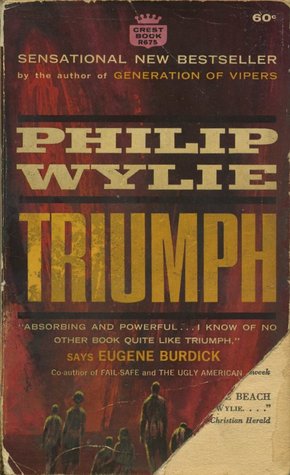
Triumph by Philip Wylie (first paperback edition)
Star Wrek III: Time Warped by Leah Rewolinski (just because I love Star Trek & a good parody)


Friday, May 10, 2013

Friday Memes: The Age of Innocence


Book Beginnings on Friday is a bookish meme now sponsored by Rose City Reader (who originally inspired the meme). Here's what you do: Share the first line (or two) of the book you are currently reading on your blog or in the comments section. Include the title and author so we know what you're reading. Then, if you are so moved, let us know what your first impressions were based on that first line and if you did or did not like that sentence. Link up each week at Gilion's place.

Here's the first line from The Age of Innocence by Edith Wharton:
On a January evening of the early seventies, Christine Nilsson was singing Faust at the Academy of Music in New York.

Whoo Boy! That's some exciting beginning there. Don't you think?  {And that's the 1870s, by the way.}


The Friday 56 is a bookish meme sponsored by Freda's Voice. It is really easy to participate. Just grab a book, any book, and turn to page 56. Find a sentence that grabs you and post it.

Here's mine from The Age of Innocence by Edith Wharton:

As he went out into the wintry night, New York again became vast and imminent, and May Welland the loveliest woman in it. 

Thursday, May 9, 2013

Alphabet Crime: Letters D & E

Here we are kicking off another year of the Alphabet in Crime Fiction hosted by Kerrie at Mysteries in Paradise.  Each week she expects participants to produce a post featuring a mystery/crime novel, mystery novelist, or crime fiction topic related to that week's letter.  In the past I have pretty much stuck to titles or authors, but this year I'm going to try and produce posts on various crime and mystery topics.
I somehow got off track last week and missed posting.  So, here are both letters D & E. 


D is for Detectives. What good would a mystery novel be without a detective? Whether it be an official representative of the law such as Lt. Bill Weigand or Inspector Heimrich in the novels of Frances and Richard Lockridge, a private, "consulting" detective like Sherlock Holmes, or your out-and-out amateur like Agatha Christie's Miss Jane Marple, you've got to have a detective to help the reader sort out the clues and get to the bottom of the mystery. Personally, I always enjoy trying to figure it all out before the detective. And I'm pretty broad-minded. I like most any kind of detective--even the hard-boiled type in small doses.

Within each category of detective there is even more variety....There are the quiet, unassuming elderly ladies like Jane Marple and Patricia Wentworth's Miss Silver whom everybody seems to underestimate. Those fluffy old ladies drink in the gossip and have their eye on everything that goes on in their small towns. There's Nero Wolfe sitting in his brownstone home--drinking beer, raising orchids and unraveling all the mysteries that come his way. There's the very logical and scientific "Thinking Machine" (Dr. S. F. X. Van Dusen). And, of course, there's Hercule Poirot who depends on his "little grey cells." Representing the law, you have Inspector McKee, one of New York's finest and starring in some of the first examples of the police procedural. More recently, and on the other side of the pond, there is London's Inspector Lynley. A very good detective--but a very human one. Elizabeth George's stories have a lot of human interest mixed in with her mysteries.

Hmmm. Maybe I should put The Age of Innocence by Edith Wharton on hold and grab me a detective novel.....


E is for Evildoers.  And, of course, without the evildoer/s...the culprit, villain, murderer or thief...there would be no mystery.  Crime fiction features evildoers in all shapes and sizes from the "Napoleon of Crime," Professor James Moriarty who is Sherlock Holmes's nemesis, to Flambeau, the jewel-thief and master criminal in Chesterton's Father Brown stories who eventually turns detective.  There are burglars and serial killers, bank robbers and poisoners.  There are the famous master criminals (as mentioned) and the regular Joes who suddenly burst out in murderous rage.  There are the fictional accounts of Jack the Ripper--with everyone from P. D. James to John Gardner and Robert Bloch (Pyscho) to
Paula Marantz Cohen (What Alice Knew) giving us their solution to Jack's identity.  There are blackmailers and poison pens, art thieves and frauds.  There is a little larceny and a lot of blood-letting and it all serves to allow the crime fiction reader the pleasure of hunting down the culprit from the comfort of their own home, watching as justice prevails, and knowing that, for the most part, good will conquer evil in the fictional world of crime.

Monday, May 6, 2013

It's Monday! What Are You Reading?

It's Monday! What Are You Reading? is a bookish meme hosted by Book Journey. It's where we gather to share what we have read this past week and what we plan to read this week. It's a great way to network with other bloggers, see some wonderful blogs, and put new titles on your reading list. So hop on over via the link above and join in...and leave a comment here so I can check out what you are reading.
 
Still behind...no matter what I do.  Even having upped my reading last week to five books.  May have to face not meeting my reading goal this year.....

Books Read (click on titles for review): 
Death Has Green Fingers by Lionel Black 
Blood Makes Noise by Gregory Widen
Inland Passage by George Harmon Coxe 
Choice of Evils by E. X. Ferrars 
The Talking Sparrow Murders by Darwin L. Teilhet
 

Currently Reading: 
Murder as a Fine Art by David Morrell: Thomas De Quincey, infamous for his memoir Confessions of an English Opium-Eater, is the major suspect in a series of ferocious mass murders identical to ones that terrorized London forty-three years earlier. The blueprint for the killings seems to be De Quincey's essay "On Murder Considered as One of the Fine Arts." Desperate to clear his name but crippled by opium addiction, De Quincey is aided by his devoted daughter Emily and a pair of determined Scotland Yard detectives. In Murder as a Fine Art, David Morrell plucks De Quincey, Victorian London, and the Ratcliffe Highway murders from history. Fogbound streets become a battleground between a literary star and a brilliant murderer, whose lives are linked by secrets long buried but never forgotten.. [Review request book]

   
Books that spark my interest:
The Hollow Chest by Alice Tilton
The Age of Innocence by Edith Wharton
The Secret History by Donna Tartt
The Sense of an Ending by Julian Barnes 

Challenge Complete: European Reading Challenge


Host: Rose City Reader
Name: European Reading Challenge, 2013
Post Reviews

Dates: January - January
My Goal: 5+ Books (Five Star, Deluxe Entourage)
I signed up to read books set in European countries or written by European authors--with a goal of five or more.  With six books under my belt, my stated commitment is fulfilled. But--there are more European books sitting on this year's TBR shelves, so more reviews are coming your way.  Thanks to Rose City Reader for hosting this one again!
My List:

1. The Man Who Went up in Smoke by May Sjöwall and Per Wahlöö (set in Hungary, written by Swedish authors) [1/8/13]

2. Whip Smart: Lola Montez Conquers the Spaniards  by Kit Brennan (Spain) [2/9/13]
3. Three English Comedies by A. B. De Mille (United Kingdom) [2/27/13]
4. The Perfect Landscape by Ragna Sigurdardottir (Iceland) [3/12/13]
5. The Lady Vanishes by Ethel Lina White (Bulgaria--actually takes place in the "Balkans" which area covers parts of Bulgaria, Serbia, Turkey, etc; I have arbitrarily picked Bulgaria for location) [3/17/13]
6. The Talking Sparrow Murders by Darwin Teilhet (Germany) [5/6/13]
 

The Talking Sparrow Murders: Review

I think all of us were caught in the strange panic and fear which swept through Germany after Hitler had assumed control. No one knew what was going to happen or what could happen. (p. 39)

The Talking Sparrow Murders by Darwin L. Teilhet ("Tee-let") was written in 1934 and is set in Germany just as the Nazi party is beginning to rise and Hitler has been Chancellor for a year.  The book has been praised (on the cover, in the back blurb, and in the introduction) by Dorothy L. Sayers, Julian Symons, and Douglas G. Greene with comparisons to John Dickson Carr and all speak favorably of it in the company of other crime fiction such as The Thin Man, The Postman Always Rings Twice, Murder on the Orient Express, and The Nine Tailors--all of which came out in that year.

I absolutely agree that it is a phenomenal book historically.  As Greene's introduction mentions, Teilhet, an American who spent time in Germany, witnessed these events first hand.  He is one of the few writers of those early years of Hitler's reign to realize what a terrifying prospect that was.  It is easy for us to look back and wonder why more people didn't recognize what Hitler and the Nazi party would mean to Germany, the Jews, to Europe and the world.  But few popular authors did--and "it took five or six years for popular writers, who usually reflect widely-held attitudes, to feature Hitler and the Nazis in their novels." (Greene)


So, it is very interesting to read a mystery/spy thriller novel written by a man who was on the spot at the time.  I wish I could say the mystery as a whole interested me in the same way.  Written by an American, the story comes across as having been written in German and translated.  The dialogue is stilted...even when it involves conversations between Americans.  The comparisons to Carr are somewhat accurate--the entire story has a very bizarre feel, not unlike some of the early Henry Merrivale stories or even the Bencolin stories.  And, of course, the plot reminds one of The Thirty-Nine Steps in which the wrong man will be accused if the police catch up to him.  Except, in The Talking Sparrow Murders, the police do catch up to William Tatson right away and he spends the rest of the novel trying to prove that he doesn't know anything about the death of an old man who was muttering about "talking sparrows"--or the other murders that happen along the way.

The story opens with Tatson on  his way to an appointment.  He's stopped in the street by old man who says, "I think I must be ill." Tatson suspects an old ploy to get him in a taxi and robbed and tries to politely pass on by, but then the old man starts talking about hearing a sparrow speak--a bird that says, "Help! I am caught!"  And that's when Tatson's troubles begin.  The old man is shot and Herr Polizeidirector Kresch seems to suspect that Tatson is involved.  Tatson is due to leave Germany and return to a job in the States--if he's not on his way home in two weeks at the latest, he will lose his position.  And so begins a mad dash to unravel the mystery before his two weeks are up.  The resulting plot will involve more murders, a bit of fraudulent book-keeping, a mystery man by the name of La Roc, and a couple of lovely ladies.  Tatson will be held in jail, beaten up, and shot at before he and Kresch can bring things to a successful conclusion.  And running underneath is the steady threat of the Nazi take-over of Germany.

There are plenty of twists and turns along the way and it's easy to see why Tatson is so wrong so often.  I would like to give this a full three stars (and will on GoodReads), but can't really do so here....2.75 stars.  It's just not quite what I usually call a good solid read.


Challenges: Vintage Mystery Challenge, 150 Plus Reading Challenge, Outdo Yourself, Off the Shelf, Embarrassment of Riches, What An Animal, Around the World, Monthly Key Word, Mount TBR Challenge, 52 in 52, A-Z Reading Challenge, Mystery/Crime Reading Challenge, European Reading Challenge

Saturday, May 4, 2013

Bingo Challenge: Square #18 and Bingo #4!


With my latest read (Choice of Evils), I have filled in another square--

Reread 2 Books  
1. The Mystery of Hunting's End by Mignon G. Eberhart (3/29/13)  
2. Choice of Evils by E. X. Ferrars (5/4/13)

...and collected my fourth Bingo of the challenge!  Onward to clear the board!

A Choice of Evils: Review


 Choice of Evils
by E. X. Ferrars is one of those nice cozy little academic mysteries that I love so much. In this case, the academic is retired botany professor Andrew Basnett--who just has a knack for getting mixed up in matters of murder.  In his eighth outing, Professor Basnett has finally wrapped up his biography of Robert Hooke (a project that he's been working on for quite some time) and he decides to treat himself to a holiday in the seaside village of Gallmouth.  Basnett and his late wife had taken several pleasant trips to the quiet village and he returned there periodically when he felt in need of a rest.


While there, he meets up with his nephew, Peter Dilly.  Peter is a successful author of science fiction stories and has been invited to participate in Gallworth's first-ever arts festival and speak on a panel of authors.  Simon Amory, another successful novelist who lives in Gallworth, is hosting Peter during the festival weekend and invites Basnett to dinner when he learns that his guest's uncle is staying in the village as well.  At dinner Peter and Andrew are introduced to Mina Todhunter, a children's author who will join Simon and Peter on the panel, Simon's sister-in-law Rachel Rayne, and Edward Clarke, the chair of the festival committee.

After dinner, they all head to the local theater for the panel discussion and beforehand Simon Amory is confronted by Magda Braile, obviously an old flame and the star of the festival's production of The Duchess of Malfi.  There is much tension in the air, but the panel discussion is successful and the evening seems to have gone well.  The only odd note is that Rachel disappears from the gathering afterward and is later spied by Peter sneaking out of the summer house on Amory's grounds (the summer house serves as Amory's work area for his writing).

The next day Rachel seeks advice from both Mina Todhunter and the professor, but neither of them give her much attention.  Before the day is over, Rachel is discovered shot to death in the summerhouse....and things look a bit black for Andrew's nephew.  Peter was the last one to see Rachel alive and he's also the one who discovers her body.  He immediately calls on his uncle to come and lend support because after all, Andrew's "had experience with this sort of thing. [He's] helped the police before. There was that affair of the dinner where the man got poisoned with cyanide, and the time the QC man got blown up by a bomb."

Andrew does get interested (and not just on his nephew's behalf) and soon he's discovering a web of bigamy, blackmail, lies, and fraud...and another murder is committed.  This time the victim is Magda.  But where exactly does the finger of accusation point?  To Amory who may not have claim to his wife's property after all?  To Desmond Nicholl, the husband of Magda Braile, who may have had reason to kill his wife?  Or to someone else?

This was a reread for me.  It had been long enough since I read it the first time that while I met certain passages and scenes with quick recognition, I still was sure enough of the ground to spot the culprit right away.  The Professor Basnett mysteries comfortable cozies that satisfy the mystery reader without a lot of blood and gore or psychological thrills and tension.  Believable characters and an interesting twist on the blackmail scheme make for a good solid three star reread.  It's possible I would have given it four stars the first time 'round--but for some inexplicable reason I don't have a record of my initial reaction (not even the star rating that I normally would have).

Thursday, May 2, 2013

Inland Passage: Review

Well-known for his hard- to semi-hard-boiled crime novels and characters created in the Black Mask pulp magazine, George Harmon Coxe's Inland Passage would seem to be a stand-alone, more straight-forward crime fiction novel.  Sure, there are some gangster-types lurking about, but the focus of the mystery is more of a simple whodunnit than most gangster-oriented stories.

Knox Randall had taken a bruised heart and three thousand dollars with him to Florida.  His plan included wine, women and song (well...good times, anyway)--enough to help him forget the girl back in New York who had bruised his heart.  He is down to his last three dollars and forty cents when a newspaper ad catches his eye.  A Mr. Perry Noland is looking for an experienced sailor to run his boat up north--payment of a small sum up front and whatever Randall can earn from taking on passengers for a pleasure cruise up the coast.

It sounds ideal to Randall and soon he has hired first mate/steward/cook to help with the duties and has rounded up a full complement of passengers.  But all is not what it seems--from the initial hire to passengers traveling under assumed names to gangster-types following the boat by land.  The owner of the boat is found shot to death and the first mate isn't long for this world either.  Randall, an advertising businessman by trade, begins to wonder just what kind of a job he's taken on.  He knows that there is some sort of sleight of hand going on beyond the murders and, having fallen for one of the passengers, he makes it his business to get to the bottom of things.

And get to the bottom, he does.  This was an interesting, fun, and fairly light crime novel from the '50s.  Randall is a great character and most of the other characters are flushed out with few mystery stereotypes.  He plays his final wrap-up scene well--with a nice bit of action thrown in.  A pretty fairly clued mystery--I had my suspicions about the villain of the piece, but didn't quite put it all together.  Three stars for a solid mystery.

Challenges: 150 Plus Reading Challenge, Outdo Yourself, Vintage Mystery Challenge, Mount TBR Challenge, Off the Shelf, A-Z Reading Challenge, Mystery/Crime Reading Challenge, Embarrassment of Riches, Monthly Mix-up Mania