





You are invited to the Inlinkz link party!
Click here to enter



.jpg)
Paul Raeburn is on his way home in his fancy Rolls Royce when he's hailed by a man blocking the road. It winds up being a man he thought was dead. A man who thinks Raeburn done him dirty (leaving him to hold the bag on a little matter of fraud and arson) and he means to make Raeburn pay...through the nose. But Raeburn isn't having any of that...he knocks the man out and then runs over him with his Rolls. When Raeburn is nabbed by a constable who was practically on the spot, Inspector Roger West is delighted. He's positive that this time the police have a case that will stick.
But West is wrong. A surprise witness appears at the trial to support Raeburn's claim of an unavoidable accident. She swears that the man dashed in front of the car and there was no way Raeburn could have missed him. Raeburn is set free and West redoubles his efforts to find a way to put the unscrupulous businessman behind bars. Raeburn seems to have the upper hand...but everyone makes mistakes. West just has to be patient and wait for Raeburn to make the one that will lead to his downfall. When men associated with the case begin to die, West knows that time is coming soon.
Definitely not a whodunnit--we know from the beginning that Raeburn is a killer. We know who he killed and how he did it. The only question is will this slimy high-end crook get away with it? Inspector West repeatedly thinks he's got Raeburn exactly where he wants him, only to have the man slide out of his grasp. It's not looking good for the forces of good even as the last few pages come in sight.
Creasey writes a darn good police procedural and this one is better than most. We get to see all the details as West endeavors to get his man. And they're not tedious details--very interesting maneuvers to rightfully pin the crimes on the man behind it all. It's a definite challenge when Raeburn seems able to cover his tracks and manage to make West look bad in the press all at the same time. A fascinating study of a real battle of wits and nerve. ★★★★
First line: The powerful car moved swiftly and quietly along the road which led across Clapham Common.
Last line: "Good old pop!"
****************
Deaths = 4 (one run over; one gassed; two poisoned)

Beverly Gray, aspiring reporter, and her friends are on a sailing cruise around the world on the Susabella. Their trip has taken them to the far east (and included adventures related in the previous two books). Earlier in the journey, they discovered half of an old map with directions to a treasure located on an island near China and had to outsmart a nasty Count to retrieve the other half. The treasure is hidden on an island with hostile inhabitants and when her friends are captured it takes all of Beverly's ingenuity to effect a rescue. The adventures come fast and furious. The exploits include the discovery of a jeweled dagger that must be returned to the Chinese temple where it belongs; Beverly & Larry flying over Mount Fuji (and an emergency parachute jump when the plane loses power); the exploration of an Indiana Jone-style temple with skulls lining the walls; Beverly being swept overboard and rescued during a hurricane; and Beverly's chance at a foreign correspondent job when Shanghai is invaded.
There really isn't much mystery to be had in this installment--it reads more like the "Perils of Pauline" as Beverly and company repeatedly fall into danger and get out of it again. It almost felt like Clair Blank was trying to stuff as many types of exotic adventures into the book as possible with nothing to hold them together except the idea of travel. I think I would have enjoyed this one much more if there had been a more intricate mystery connected to the treasure hunt and the focus had been there rather than hopping from danger to danger and adventure to adventure. ★★★
First line: A group of six young people waited impatiently on the Shanghai dock and cheered lustily as a girl fled through the crowd.
Last line: Let us say "Aloha Oe" to them here to meet again in "Beverly Gray's Return," when we shall find them in new and exciting adventures.

One year ago, the Bartons held a dinner party at the exclusive Luxembourg restaurant. The lights went down for a cabaret show and when they came up again Rosemary Barton was dead, poisoned by cyanide. Rosemary had been in recovery from flu; a flu that could make the afflicted feel depressed. Her sister Iris also testified that Rosemary had left a paper on her desk indicating how she wanted certain pieces of property left in the event of her death and so the death was ruled a suicide.
But recently her husband George had begun to wonder if that ruling was correct, especially after he received anonymous notes telling him that Rosemary's death was not a suicide. And so he devises a plan to unmask the killer. It involves hosting another dinner party, with the same guests, and one empty place waiting for a surprise but his plans go awry. Oh, there is a surprise, but definitely not the one George intended...for at the end of the entertainment this time George is the one who dies...from cyanide.
Colonel Johnny Race was meant to be a guest at that first dinner, but he had to cancel at the last minute. Then George Barton tried to get him to come to the most recent dinner, but Race thought George's plan was ill-advised and refused to participate. When George is killed too, Race works with Inspector Kemp to discover who the guilty party is. They soon find that any of those who attended the parties could have had a motive. Iris came into a lot of money when Rosemary died. Stephen Faraday, minor MP, had had an affair with Rosemary and tried to break it off--he faced ruin if she, as she told him she would, gave news of the affair to both George and Stephen's wife Lady Alexandra "Sandra" Faraday. Sandra strikes the men as the type to kill to keep her man. Ruth Lessing, secretary to George Barton, is thought to have been in love with the boss and might have wanted the inconvenient wife out of the way. And Anthony Brown, a mystery man, had also flirted with Rosemary--that is until she revealed that she knew his name wasn't Brown. Then he threatened her to keep her mouth shut..."or else." And, of course, if the murderer of Rosemary had thought that George was getting too close to the truth, then it makes sense that he had to die too. Except--it seems impossible that anyone could have slipped poison into his glass.
Even though I have read this before (long before blogging) and have seen the televised versions of it, Dame Agatha still managed to fool me. This is one of the things I like about her--if it's been long enough I can reread her less well-known titles and still be mystified. I did think about the culprit, but not for the reasons given. I am a little skeptical of the way the poison was introduced to George's drink, but I'm willing to go along with it. Overall, a good mystery and excellently narrated by Hugh Fraser. He manages the different voices for the men superbly. ★★★★
First line: Six people were thinking of Rosemary Barton who had died nearly a year ago.
Last line: And more softly still, "Pray love remember."
******************
Deaths = two poisoned
.jpg)
This is a very comprehensive (for its time) collection of essays and pastiches, poems and lists regarding the mystery. We have everything from "A Defense of Detective Stories" by G. K. Chesterton to Rex Stout's controversial address to a meeting of the New York Baker Street Irregulars title "Watson was a Woman." There are essays dissecting what makes the mystery popular to the best methods of detection to examinations of the various forms. There is a biting parody of Philo Vance in Christopher Ward's "The Pink Murder Case." We are told that the detective sstory is everything from a modern romance with the detective in the role of a modern knight-errant to a morality tale. And, Edmund Wilson's essay "Who Cares Who Killed Roger Ackroyd?" notwithstanding, those of us who love a good mystery will agree with Willard Huntington Wright (known for detective fiction under the name S. S. Van Dine) in "The Great Detective Stories" that
There is no more stimulating activity than that of the mind; and there is no more exciting adventure than that of the intellect. Mankind has always received keen enjoyment from the mental gymnastics required in solving a riddle; and puzzles have been its chief toy throughout the ages.
There are other elements that are important (setting/atmosphere; characters; etc.), but a good puzzle is absolutely essential and we love it when we can solve the puzzle before the sleuth in the story.
I will say that if this volume had not come up as a prompt in the Reading Randomize reading challenge, that I probably would not have read this straight through. My suggestion is that those who are interested should pick and choose--read a few essays here, put the book away for a while, and then come back to it. Trying to gulp all this down in one reading was a bit much. There is a lot to think about and a lot to enjoy and it would be best to do so in small batches. ★★★★
First line (1st essay): In attempting to reach the genuine psychological reason for the popularity of detective stories, it is necessary to rid ourselves of many mere phrases.
Last line (last essay): Possibly the alternative (pace Edmund Wilson!) is for the whodunit to take over the novel of manners.

The fourteenth entry in the Sebastian St. Cyr, Lord Devlin series. In the twelfth book, Devlin had discovered that two members of the ton were behind the torture and deaths of street children. While he was able to bring the crimes home to one of the culprits (and exact a measure of justice on behalf of the victims), he was unable to prove the involvement of Lord Ashworth. The sadistic young man went on to marry Devlin's niece Stephanie and make her life miserable. Throughout his thirty-some years, he had left a trail destroyed lives.
But
now someone has put a stop to all that. Lord Ashbury is found brutally
murdered among the bloody silken sheets of his bed. The young lord
openly consorted with others after his marriage and was known to like
his relations rough and at first it looks like his latest conquest may
have panicked and killed him as a result of their treatment at his
hands. But there are too many questions that this solution doesn't
answer. Why was Ashbury's valet killed also--and left naked in a nearby
alley? Where has the housemaid disappeared to? What is the connection to
the Russian duchess who has recently come to London? And finally--why
has the man's closest friend been killed as well? And then there are the
whispers that Lady Ashworth--Devlin's niece Stephanie--was carrying on an affair
of her own...perhaps she or her lover are responsible? Someone tells Devlin that Stephanie was seen buying a muff pistol. Now...if Ashworth had been shot, that would be telling indeed.
Devlin is desperate to find answers--not because he cares much that Ashbury is dead, but because he doesn't want the innocent to suffer. Answers that he hopes will prove that his niece is innocent. But evidence keeps piling up that points towards a woman--from a small bloody handprint to a silk stocking left behind in Ashworth's bedroom to a bundle of blood-stained women's clothing picked out of the river by river wherryman. But are these clues telling the whole story?
Another top-notch historical mystery from C. S. Harris. There are plenty of red herrings to distract and I honestly did not see the ending coming. So well done in the mystifying the reader department! I enjoy the period details and the background history that Harris provides--without cluttering the narrative with info dumps. Each entry in the series teaches me something about the Regency era that I didn't know--or didn't know very much about. The backdrop for this novel is the end of the war with Napoleon and the beginnings of the machinations on the part of England and Russian to determine the fate of Europe after the war. Devlin and all of the main characters continue to interest and delight and I'm still waiting for the other shoe to drop in the Jarvis household. ★★★★ and 1/2.
First line: Bloodred and splayed wide as if in panic, the dried handprint stood out clearly against the white, freshly painted inside panel of the town house's front door.
Yet even as he said it, Sebastian knew it was useless. Giovanni had already picked up his burden of guilt, and he would carry it with him to the grave, if not beyond. (p. 186)
Secrets that shield the wicked should be exposed. But why not hide an ugly truth that would only harm an innocent? (Sebastian St. Cyr; p. 207)
Last line: "We can't."
**************
Deaths = 11 (five stabbed; one drowned; one hit on head; three shot; one strangled)

Miss Julia Ward Howe Tilley is about to turn ninety and the town of Tinker's Cover is gearing up for a big bash for the beloved former librarian. There will be cake and a "This Is your Life"-style presentation. The the marching band will perform and the local television station is planning to air a spotlight segment. And...there will be murder.
On the morning that Lucy Stone and the girls decide to organize Miss Tilley's birthday celebration, Lucy is also asked to look into the death of Sherman Cobb, the town's primary (and oldest) lawyer. Cobb had just received word from his doctor that he has pancreatic cancer and the death has the earmarks of suicide--an old man taking the easy way out before the deadly disease gets too bad. But Cobb's partner in the law practice has severe doubts and wants Lucy to use her investigative reporting skills to poke around. But who would want to kill Cobb? Everybody loved the older man and he never got involved in any bitter court cases. Amongst Cobb's papers, Lucy finds a connection between Miss Tilley...and the mysterious niece and great-nephew who have just appeared in Miss Tilley's life. It looks like the present death...and danger to the town's beloved librarian has its roots in the past. Can Lucy dig up the correct roots in time?
A fairly run-of-the-mill cozy mystery. Lucy, as cozy amateur detectives do, manages to get in a tight spot--even to the point of getting shot--in the denouement. But, of course since it's a cozy, she's not hurt much at all and seems pretty back to normal by Miss Tilley's birthday party. I would have appreciated more detecting on Lucy's part and less worrying about how she's aging and those extra pound she's gained. But, miracle of miracles, those few morning work-out video viewings have worked magic and she's trimmed down and able to fit in those pants that were too tight at the beginning of the book--and that cream she's been smearing into her face must be miracle cream as well, because the wrinkles are smoothed out too.
The villain of the piece was a nice little cardboard cutout, out for revenge. No real character build to make the revenge motif seem plausible, just enough to provide motive so when the police cart them off at the end we can be glad to see the back of them. And we can be pleased that it wasn't any of the characters we like. ★★ and 1/2.
First line: Sherman Cobb wasn't feeling well.
Last line: "No way," she said. "I've just begun to fight."
****************
Deaths = two shot

Lady Hero Devlin stumbles (quite literally) over the body of a beautiful young musician while on a socially conscious mission in the area of Clerkenwell. But what was Jane Ambrose, musical teacher to Princess Charlotte, doing in that part of town? The palace decides to hush things up--calling what is clearly manslaughter at best and quite likely murder an "unfortunate accident." Sebastian St Cyr, Lord Devlin takes up the case--for he has never paid attention to the "official" way of handling delicate affairs. He and Hero are determined to seek justice for Miss Ambrose.
The more they learn, the more intricate the plot surrounding the musician becomes. There are ties to the throne through Princess Charlotte, there are stolen letters which may put a spoke in Lord Jarvis's plans for England and Europe, and there is a plot of gold smuggling which Jane may have stumbled across. But there are also more homely matter--Jane's husband keeps a mistress and she herself was in love with another. Had she threatened to leave her husband--not only making for a scandal but also cutting off his livelihood? For Edward Ambrose's operas were not his own--his wife, barred from publishing such musical endeavors under her own name had written the works and he had taken the credit. Devlin and Hero will have to carefully investigate the international and domestic leads--dodging dangers on all sides before untangling the threads to find the one tied to the killer.
This excellent entry in Harris's historical mystery series was the first to garner the coveted ★★★★★ rating from me. The setting is superb--the last Frost Fair in England. This is the last time the Thames was completely frozen with games on the ice and all sorts of merchandise sold. She portrays the excitement and atmosphere surrounding the events perfectly. The mystery is well-plotted with an unexpected denouement and she kept me guessing till the end. And I loved that Hero Devlin got to have more involvement in the investigation and a bit of the action herself--taking out one of the bad guys with her little muff pistol.
“Is he dead?"
Alexi knelt in the snow beside the still body. "Not yet. But he will be soon."
Hero sucked in a deep breath tainted with the stench of fresh blood and burning fur. "Good."
Alexi looked up at her. "Your muff is on fire."
"Drat," said Hero, dropping the flaming fur into the melting snow. "I just purchased it.”
She is truly a good match for our hero, Lord Devlin. Strong. Strong-minded. Well able to take care of herself. I said it before and I'll say it again: if Harris decides to kill Hero off in a later installment (a la Elizabeth George and her Inspector Lynley series), I won't forgive her.
First line: A howling wind flung icy snow crystals into Hero Devlin's face, stinging her cold cheeks and stealing her breath.
The truth is frequently more dangerous than a lie (Valentino Vescovi; p. 59)
[on telling the truth] I'm not convinced either of them is. Although if I had to put money on one or the other, I'd pick the Italian harpist over the decorative Dutch courtier any day. (Hero Devlin; p. 63)
We like to believe the world arcs towards justice--I suppose because it reassures us and makes us think there's some sort of order to our existence, but what if we're wrong? What if it's all meaningless chaos and chance? (Alexi Sauvage; p. 295)
Last lines: "She was an extraordinary person--steadfast, loving, and brave." [Devlin] "Yes," said Hero. "Yes, she was."
***************
Deaths = 6 (one hit on head; three stabbed; one shot; one drowned)
.jpg)
This volume is part of a ten-volume set made up of ten short stories per set. This is the fifth volume of the set that I have sampled. As Thwing says in his introduction, picking the 100 best stories even in the early years of the mystery field was no easy job. It's easier to just select personal favorites--but one really needs to select a wide variety of popular favorites to meet the tastes of more readers. Of course, no matter what an editor does, he will still not pick everyone's favorite and be able to make everyone happy. And this is the third volume that hasn't made this reader very happy. They may have been popular favorites of the 1920s, but these are not very strong selections--especially the stories by Melville Davisson Post which open the book. The best of the bunch are the final two: "The Un-Punctual Painting" and "The White Line," neither of which involve murder. I can only hope that the rest of the collection is better. ★★
"Naboth's Vineyard" by Melville Davisson Post: Uncle Abner sets out to prove that a man accused of shooting his employer is innocent. But will he implicate the woman that man loves? (two shot)
"The Problem of the Five Marks" by Post: A story of an innocent abroad. Our narrator, not a man of the world, is sent to France ostensibly to help wrap up the mystery of his great-aunt's death. But he finds himself involved in an adventure with a cryptic clue and a missing pearl necklace. (one natural)
"The Inspiration" by Post: Walker, an American Secret Service Agent, is asked to help get a lovely young girl out of the clutches of her guardian. The young man who loves the girl is certain that the guardian means her no good.... (one frozen to death)
"The Phantom Woman" by Post: Sir Henry Marquis of Scotland Yard aids a young woman in the effort to retrieve her mother's priceless bracelets from the clutches of her stepmother's husband. (one natural)
"The New Administration" by Post: Justices from a very Supreme Court indeed intervene in the trial of a young man about to be sentenced for defrauding his employer. The case is much more complex than the circuit court thought.... (one natural)
"The Pigeon on the Sill" by Herman Landon: Things look bad when a man is released from prison and his uncle, upon whom he vowed revenge, is found shot to death. The truth of the matter rests on a missing cockatoo...and the pigeon on the sill. (one shot)
"The Greuze Girl" by Freeman Wills Crofts: An apparent art swindle leads to a crime of a different sort...
"The House of Many Mansions" by Frederick Irving Anderson: An exclusive apartment complex with its very own gold-plated dining experience houses a den of thieves...and a wily detective who plans on nabbing every one of them.
"The Un-Punctual Painting" by Bertram Atkey: Mr. Bunn & Colonel Fortworth find a kidnapped boy using the clue of the painting that was an hour late...according to the boot-black boy.
"The White Line" by John Ferguson: Two men are making the running for a young heiress's hand aboard a cross-Atlantic liner...everyone on board is placing bets on which will be victorious. The underdog seems to have the upper hand but then one of them is implicated in the theft of the lady's priceless necklace.
First line (1st story): One hears a good deal about the sovereignty of the people in this republic; and many persons imagine it a sort of fiction, and wonder where it lies, who are the guardians of it, and how they would exercise it if the forms and agents of the law were removed.
Last line (Last story): The words in themselves might have committed her to nothing, but there was that in her tones which led every man who heard them to settle his bet without a murmur.

Sebastian St. Cyr, Lord Devlin, is drawn into one of his darkest investigations yet. It begins with the interruption of a clandestine burial at an abandoned Clerkenwell shot factory. The body is that of Benji Thatcher, a fifteen-year-old boy from the streets. He was brutalized in terrible ways before he was killed. A constable with a conscience refuses to accept the quick inquest's decision of accidental death. He claims the body for a proper burial, but takes Benji to Paul Gibson for a proper autopsy. As soon as he sees the body, Paul sends a message to Devlin--knowing that if there is to be any justice for the young boy, then Devlin is the only one who will care enough to do something. But it isn't long before Devlin has more deaths to investigate...and growing suspicion that the man his niece is betrothed to is somehow involved.
The last time I read this, I noted how difficult it was for me to read it. Not because it's a bad book. But because I have an extraordinarily difficult time reading about the murder and horrific treatment of children. While the descriptions aren't overly graphic, they are enough to make it very hard to read or listen to. If I hadn't wanted to continue my journey back to the most recent book and also remind myself of certains points in the overarching story about Devlin and Hero and their families then I probably would have given this one a miss. I was pleased to see Devlin and his father, the Earl of Hendon, begin to patch up their differences at the end. I do wonder whether anything will come of certain suspicions I have about the Jarvis household, however. And I'm surprised that Hero and Devlin don't share my suspicions. ★★★★
First lines: The boy hated this part. Hated the eerie way the pale waxen faces of the dead seemed to glow in the faintest moonlight.
Last line: "Well. That should make for some interesting family gatherings," said Ashworth, a faint provocative smile on his handsome face as he moved to take his place beside his bride.
***************
Deaths = 12 (four strangled; seven stabbed; one fell from height)

Death comes to the university library at a New York college that may remind readers of Cornell. When Mademoiselle Coindreau, the beautiful and alluring French assistant professor, is found dead below the balcony of the library, it is put down to accident. Why the woman left the President's party and went to the library after hours is a mystery. Why she climbed the step ladder in an evening gown and high heels is also puzzling. But most mysterious of all...at least to Miss Gilda Gorham, the Chief Cataloguer of the library...is how she managed to topple off the steps and over the balcony's railing. Even if she caught her heel in the long gown, she should have landed on the balcony floor...but when Gilda starts putting (what she thinks are) innocent questions, she's told to leave well enough alone. The police think it's an accident, so an accident it is. But when a second professor is found strangled to death in the locked room where rare books and erotica are kept and a very rare book has gone missing, it becomes apparent that Gilda is right. Something nasty is going on among the stacks of books. Does it have more to do with the romantic interludes between the professors or the missing Filius Getronius of Hilarius?
This is a delightful send-up of academic life in the 1940s. It comes complete with debonair Professor Parry and his just-barely-printable (at the time) limericks. And lots of funny repartee between the professors and between Gilda and Parry. Given when the book was written there are, of course, many references that are dated--and possibly mildly offensive, especially to women. But Gilda is a woman who knows her own mind and though romance may be in the air, the outcome may not be quite what readers expect. The plot is serviceable, but not brilliant nor is Gilda's detective work. There is just a tad too much thinking about who might have done what and little actual sleuthing going on. If the plotting and detection had been more solid, this would easily have garnered five stars. What carries the book for me are the characters and the verbal play--as well as the academic setting. Johnson/Bishop certainly knew what he was doing when it came to setting the academic scene and I do love me an academic mystery. ★★★★
First line: In the women's rest room of the University Library, Miss Gilda Gorham, Chief Cataloguer, looked at her face.
Last line: He then set off for the O. K. Diner, for a late and solitary supper.
******************
Deaths: 3 (one fell from height; one strangled; one natural)
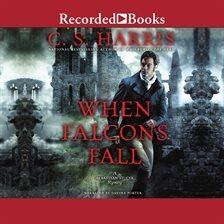
I'm continuing my reread (listen) of Harris's highly entertaining historical mystery series. Each one could be read as a self-contained mystery, but there is an over-arching story involving Devlin's personal history that encourages readers to read the series in order for best effect. The book should not ruin any previous mystery plots--but it will take the surprise out of a few of the twists in Devlin's own story. And Devlin's story is a very interesting one as are the stories of the recurring characters.
As I mention in my previous review (below), this is one of the best mystery plots in the series. Not only did she keep me guessing the first time I read it, with my sieve-like memory she managed to keep me in the dark again. Few mysteries stand up that well to rereads.
Sebastian St. Cyr, Lord Devlin, his wife Lady Devlin, and small son travel to Ayleswick-on-Teme so Devlin may deliver a final gift from Jamie Knox to his grandmother and so the nobleman may continue his quest to find answers to questions about his own ancestry. But they have barely settled into the inn in the small village when a young woman's body is found by the river. An empty laudanum beside the body makes the constable think it is suicide, but the young Squire who is new to the role of justice of the peace senses that something is amiss. Devlin's reputation for criminal investigation has preceded him and Squire Rawlins asks for his help in investigating the death.
It soon becomes clear that Emma Chance. who claimed to be a young widowed woman on a sketching tour, was more than she seemed. With Napoleon Bonaparte's exiled brother and family in the neighborhood, is it possible that she was a spy keeping an eye on the French entourage? But her interests seemed to be more focused on the history of people (men in particular) of the Shropshire village and there's a question of her own heritage. Did she unsettle someone on a more personal basis? And then there's the smuggling operation of a certain major--perhaps she was killed because she inadvertently stumbled across something to do with that...The deeper the investigation runs, the more questions Devlin and Rawlins have. And the more death stalks the village. Since Emma's questions revolved around the past, Devlin realizes that they must also look to the past to find a very present killer.
Harris does an excellent job combining historical facts with her mystery plots. Sometimes the history is absolutely integral to the mystery and sometimes it merely provides background and red herrings, but it is always entertaining and educational if you don't know much about the Regency period. This particular mystery makes use of the historical facts in a very nice way. As with historical novels written by a modern author, it is difficult to keep anachronisms out of the text--but I notice fewer in Harris's work than is often the case. And they are rarely as jarring when I do notice them.
The mystery plot in this one was also done very well. I generally spot the villain of the piece--even if I don't have all the details of motive sewn up. But this time, Harris kept me guessing till the very end. A very satisfying entry in this long-running series. ★★★★ and 1/2.
First line: It was the fly that got to him.
That's what haunts this place, he thought. It's the despair and anguish of the monks who poured their energy and joy, their very lives, into this monastery, only to see it destroyed. (p.145)
Last line: So I guess that narrows it down a bit, doesn't it?" she said, her gaze meeting his as a tentative smile curled her lips.
****************
Deaths = 13 (one poisoned; one shot; two fell from height; one drowned; two natural; two accident; two hit on head; two stabbed) [some are from the past]
.jpg)
Mary Crane is a young woman who has grown tired of waiting for her young man to pay off his father's debts so they can get married. When a golden opportunity to walk off with forty thousand dollars comes along, she takes it and drives 800 miles through a rainy night to give Sam Loomis the good news of her sudden "inheritance." But as she nears Loomis's hometown of Fairvale, she takes a wrong turn and realizes she's too tired to try and figure out how to get there that night. When she sees a glowing vacancy sign at a motel along the road, she decides that she just needs to stop for the night...
Norman Bates is the caretaker of the isolated Bates Motel--bought with his mother's proceeds from the sale of their family farm. He hasn't expected anyone to come along this late on a stormy night and is surprised when the young woman comes in and asks for a room. Then when she asks about somewhere to get something to eat, he impulsively asks her to share his dinner. But Mother isn't pleased and she's even less pleased when Norman uses a spyhole in the wall later to watch the young woman undress and get ready for a shower...
A week later, Mary's sister Lila shows up at Sam Loomis's hardware store looking for Mary. She tells him that Mary has disappeared along with $40,000 and she thought her sister might have come to see Sam. But Sam never saw her as he tells both Lila and the private detective Milton Arbogast who is also looking for Mary. Now the three of them are wondering what happened to Mary Crane between her hometown and Fairvale....
This is the novel behind one of Hitchcock's most famous movies. A movie I have never seen--but you don't have to have seen Psycho to know the basic premise. It is a movie that has seeped into popular culture and everyone's consciousness...by osmosis, apparently. I have to wonder what it would have been like to have read this in 1959 before the movie was made. It would have had much more impact on me if I hadn't known the ending in advance.
But that said, it was still an interesting and absorbing read. Bloch is a master and we get great insight into the characters of Norman and Mary--less so with the others, though the detective is also interesting even though he's not on the page much. An excellent examination of Norman's psychology and the motivations behind the events at the Bates Motel that fateful night.... ★★★★
First line: Norman Bates heard the noise and a shock went through him.
Last line: Why, she wouldn't even harm a fly...
*****************
Deaths = 6 (one auto accident; one natural; two stabbed; two poisoned)

A Holmes pastiche offering up the origins of the Baker Street Irregulars--named here as the "Baker Street Brigade" for reasons best known to the authors. When a man with yellow hands starts kidnapping children in London, Sherlock Holmes is on the case. The kidnapper gives specific instructions to the parents to ensure the safe return of the children. But despite the first money drop going off without a hitch, the money wasn't returned. The police bungled the second drop by being too readily observed on the scene. Holmes is determined that the third time won't be as unlucky.
A chance remark causes Holmes to consider the children of the streets as an unofficial detective force, so he recruits Danny Wiggins and his friends Peachy and Duff to help look for clues. Details in a picture sent to the first set of parents (to prove that the kidnappers had their son) make Holmes certain that the children are being kept near the docks. He sends the boys out to look for clues in the hopes that children won't be noticed in the same way as an adult.
Circumstances lead Holmes and the Yard to an arrest, but when Clair, the daughter of Inspector Avery of Scotland Yard--and a recent acquaintance of the boys, disappears, Danny, Peachy and Duff are sure the grown-ups have made a mistake. Will they be able to find the real kidnappers in time?
First up--the difficulties: The story supposedly offers up the backstory for the Irregulars (who appear in a few of the Doyle stories). But there isn't much logic in Holmes' choice of the boys. Here we have Holmes out on the street and someone makes a random comment that makes him think [my paraphrasing], "The missing children are being held near the docks. "Wharf rats" (children in the area) could look around and not be noticed. Hey--over there are three street children selling newspapers. I bet they'd be perfect." My first thought--would the children selling newspapers be familiar enough with the docks to know what to look for? He wants them just to look for anything "out of place." How would they know? Second thought: He just selects these random boys. Because they're there when he has the idea. It would be much more plausible if a scene had been set up where Holmes is obviously interested in someone in the area where the boys sell their papers. He questions them and the boys prove to him that they're pretty good at noticing details or whatnot. When the idea occurs to him that boys could be useful as undercover detectives, then he immediately thinks of those bright newspaper sellers. And last, as Holmes introduces Danny, Peachy and Duff to the methods of detecting, he repeatedly tells the eager young sleuths to NOT jump to conclusions. To wait until they have all the facts. So what does Holmes do? He jumps to a giant conclusion and arranges for Captain Mewsley to be arrested as part of the kidnapping gang. Not something Holmes would have done in the Doyle stories.
Okay, now that I have that out of my system: The mystery plot is a pretty good one and fairly sophisticated for what is essentially a children's story. Once the boys got the hang of detective work they did a really good job and were important to the wrap-up scenes at the end. Children reading this will be pleased with the amount of adventure and excitement as well the focus on the boys. An enjoyable read with a few hiccups for those of us familiar with the world of Sherlock Holmes. ★★★
First line: Fog shrouded the Caravaldi family home at No. 7 Trevor Place, London.
Last line: "Just like Tel el Kebir," Mewsley was saying, "where I had to shoot four cannons all by myself!"
Deaths: three natural

.jpg)


