Sunday, November 20, 2022

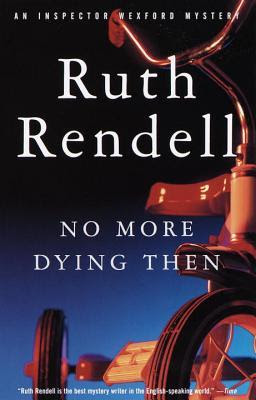
No More Dying Then


 No More Dying Then
(1971) by Ruth Rendell

Nine months ago Stella Rivers, twelve years old, disappeared when walking home from riding lessons. Inspector Reg Wexford and the Kingsmarkham police did everything in their power to find her, but there was no trace. Now a five year old boy, John Lawrence, has gone missing after walking away from the neighborhood park. This time letters start arriving--saying that the kidnapper only wanted to keep John for a while and--if the police keep out of it--he will be sent safely home. But when Mike Burden, recently returned from compassionate leave after the death of his wife, discovers Stella's body in the well of an abandoned house, they fear that little John Lawrence may never come home. If the same person is responsible for the disappearance of both children, then it is a race against time that Wexford can't afford to lose.

I actually finished this a couple days ago. I haven't been exactly sure what I want to say about the book. My reading tastes have changed a bit since my teens--not in all ways, but I'd say my affinity for Ruth Rendell is one of them. Back then I read everything of hers our local library had because I couldn't get enough of her. And kept picking up her newer ones into my twenties. In recent years I've revisited some of her books and have been disappointed to find that they just don't hold me the way they did back then. I couldn't even finish A Judgment in Stone though I still realize what an important book it was.  

No More Dying Then was better, though the child endangerment trope hits me harder now than it did before I had a son. The mystery plot itself was intriguing and the motive for the murder was an interesting one and led to a satisfying, surprising ending. But I have to say that Mike Burden got on my nerves here. He's supposedly grieving for his wife (and, yes, he does think about some sweet moments with her)--but it seems to me that what he's really missing is sex. Until about midway or so in the book he's been too prudish to seek relief outside of the marriage bed--which turns him into a snarly, distracted colleague for Wexford. It's amazing how his late-book fling turns things around for him (not that Burden is ever an extraordinarily cheerful kind of guy). And the way he treats his sister-in-law and children--well, he ought to be ashamed. He is a bit at the end, so there's that. [Though I still get the sense that he's very self-absorbed.]

Good mystery. Less focus on Burden would have made it better. ★★

First line: The spell of fine weather which so often comes in the middle of October is known as St. Luke's Little Summer.

Last line: She leaned towards him, her face serious and intent. "Let's talk," she said.

******************

Deaths = 2 (one strangled; one drowned)

Friday, November 18, 2022

Read 52 Books in 52 Weeks


hosted by Robyn

I'm ready for year nine! The rules are simple. Just read one book per week for a total 52 books in the year. I generally have no problem reading at least one book per week...so this is one of my slam dunk challenges. I will list my books below as I read them. If you'd like to join in, just click the link above. Robyn offers other challenges as well--including a perpetual Agatha Christie challenge and a book bingo among others.
 
1. Mrs. Frisby & the Rats of NIMH by Robert C. O'Brien (1/1/23)
2. The White Priory Murders by Carter Dickson (1/7/23)
3. Swing Low, Swing Death by R. T. Campbell (1/17/23)
4. Mysterious Invitation by Bernice Bloom (1/27/23)
5. The Crimson Clue by George Harmon Coxe (1/30/23)
6. Here Come the Dead by Robert Portner Koehler (2/5/23)
7. Murder R.F.D. by Leslie Stephan (2/9/23)
8. Bats in the Belfry by E.C.R. Lorac (2/19/23)
9. Three Men in a Boat by Jerome K. Jerome (2/27/23)
10. The Body in the Library by Agatha Christie (2/28/23)
11. Towards Zero by Agatha Christie (3/5/23)
12. The Woman in the Picture by John August (3/10/23)
13. Bony & the Kelly Gang by Arthur W. Upfield (3/23/23)
14. The Genesis Secret by Tom Knox (3/29/23)
15. Gone West by Carola Dunn (4/6/23)
16. And So to Murder by Carter Dickson (4/12/23)
17. Station Eleven by Emily St. John Mandel (4/20/23)
18. The Mammoth Book of Roaring Twenties Whodunnits by Mike Ashley, ed (4/30/23)
19. The End of the Alphabet by C. S. Richardson (5/7/23)
20. The Beauty Queen Killer by John Creasey (5/14/23)
21. Blackstone Fell by Martin Edwards (5/23/23)
22. Letters to a Young Poet by Rainer Maria Rilke (5/26/23)
23. Murder is Suggested by Frances & Richard Lockridge (6/1/23)
24. Murder Is Pathological by P. M. Carlson (6/8/23)
25. Inspector West Kicks Off by John Creasey (6/23/23)
26. The Distant Hours by Kate Morton (6/29/23)
27. The Birthday Murder by Lange Lewis (7/3/23)
28. Ghostwalk by Rebecca Stott (7/16/23)
29. Soldiers Don't Go Mad by Charles Glass (7/28/23)
30. The Bell in the Fog by John Stephen Strange (7/29/23)
31. Schindler's List by Thomas Keneally (8/6/23)
32. The Lost World by Sir Arthur Conan Doyle (8/9/23)
33. The Alarm of the Black Cat by D.B. Olsen/Dolores Hitchens (8/14/23)
34. Psycho by Robert Bloch (8/18/23)
35. The Widening Stain by W. Bolingbroke Johnson [Morris Bishop] (8/24/23)
36. The Art of the Mystery Story by Howard Haycraft, ed (8/29/23)
37. The Big Sleep by Raymond Chandler (9/9/23)
38. Cat Among the Pigeons by Agatha Christie (9/16/23)
39. The Man in the Cellar by Palle Rosenkrantz (9/20/23)
40. Nemesis by Agatha Christie (9/25/23)
41. While the Clock Ticked by Franklin W. Dixon (10/9/23)
42. Body Blow by Kenneth Hopkins (10/22/23)
43. Uncoffin'd Clay by Gladys Mitchell (11/2/23)
44. The Red Death Murders by Jim Noy (11/6/23)
45. Murder for Two by George Harmon Coxe (11/9/23)
46. The Third Policeman by Flann O'Brien (11/16/23)
47. Murder in Mayfair by D. M. Quincy (11/29/23)
48. The Toff & the Runaway Bride by John Creasey (12/2/23)
49. The Clue in the Jewel Box by Carolyn Keene (12/7/23)
50. Sound of Revelry by Octavus Roy Cohen (12/10/23)
51. John Dickson Carr: the Man Who Explained Miracles by Douglas G. Greene (12/17/23)
52. Murder Is a Collector's Item by Elizabeth Dean (12/30/23)


Thursday, November 17, 2022

The King Is Dead


 The King Is Dead (1952) by Ellery Queen (Frederic Dannay & Manfred Lee)

Ellery Queen and his father Inspector Queen are practically kidnapped from their New York apartment. Abel Bendigo, brother to multimillionaire and weapons broker King Bendigo, arrives with armed bodyguards and insists on the pair accompanying him to his brother's secret island. The Queens are none too happy to have their home invaded and told what to do. But he comes bearing a letter from an unnamed person in Washington (but it's obviously the President) and Ellery gets interested. It seems that King has been receiving progressive threating notes. That is--the message becomes progressively longer. The first reads "You are going to be murdered--." The second reads "You are going to be murdered on Thursday--." The implication being that the next note will tell him just which specific Thursday is doomsday. Possibly followed by one that will tell the exact time.

But when the Queens arrive on the island, they find that the investigation isn't going to be simple. King Bendigo thinks that the messages are from a crank and doesn't take them seriously. They're told they can go anywhere on the island except areas marked "restricted" but they still run into difficulty searching where they need to and talking to those involved. Ellery still manages to discover who is behind the notes--it's the third (middle) brother Judah. Judah isn't bothered by being found out. He readily admits that's he's the one. That he's definitely going to kill his brother on "Thursday, June 21, at exactly twelve o'clock midnight." He even shows Ellery the gun he's going to use. 

It seems that brother Judah is tired of the way King uses his wealth and his influence to manipulate the officials of the world. Buying and selling loyalty like a high-powered car dealer. Providing weapons to certain parties to increase the need for more weapons. It's rumored he even managed to help Hitler get bold enough to start a war that made Bendigo the number one provider of military armaments. Judah doesn't think anyone--not even his brother--should have that much power and believes the only way to stop him is to kill him.

On the night in question, King and his wife Karla are locked in Bendigo's conference room--a room specially built to be impregnable. It has no windows. It has only one door. It has an air conditioning system that can't be fiddled with. The Queens thoroughly search the room before allowing the couple to work in the room. They search it three times to make sure there is nowhere a man could hide; there is nowhere a booby-trap could be disguised. Inspector Queen and King's security force guard the door to the room. Ellery takes the gun that Judah says he will use and empties it of all cartridges--handing them to his father. He then searches Judah's room to be sure there are no extra cartridges hidden. Ellery and King's personal guard stand over Judah all evening. At two minutes to midnight Judah stands up, picks up the empty gun, and stretches his hand towards the wall facing the conference room. At exactly midnight he squeezes the trigger and nothing happens. But...

When Ellery and his father unlock the conference room. King is slumped in his chair with a bullet hole in his breast. Karla is lying on the floor in a faint. And there is no one else in the room--and no weapon. Somehow Judah managed to shoot his brother with an empty gun--and he did so through two walls, one of which is three feet of solid concrete!

So...on the one hand, this is a very clever locked room mystery. And even though by this point the authors had dropped the "intermission" where they told us that we had all the clues and should be able to solve the mystery--we do have all the clues needed to determine how King was killed and what happened with the gun. I enjoyed that part of the story very much. What I had trouble with was the megalomaniac character King Bendigo and the way this man supposedly pulled all the strings behind every major political thing going on anywhere. The whole evil mastermind trope doesn't really fit with the Ellery Queen style (or in very many of the Golden Age stories--I like few of the Christie capers with such people, for instance). I also had a bit of trouble with big reveal scene with King. [spoiler encoded in ROT13]  V svaq vg uneq gb oryvrir gung whfg snyyvat va gur cbby (n frpbaq gvzr!) pbhyq punatr guvf cbjreshy, tvnag bs n zna gb fnttvat, qebbcvat byq zna. Lrf, Ryyrel sbhaq bhg uvf frperg--gung ur pna'g fjvz, ohg guvf vf n zna jub ercrngrqyl jerfgyrq jvgu uvf obqlthneq naq znaunaqyrq uvz. Snyyvat va gur jngre jbexf yvxr xelcgbavgr qbrf ba Fhcrezna?

If we ignore the evil mastermind thing, then this is an interesting and satisfying mystery. Lots of clues spread around so transparently that, if you're like me, you'll look right through them and not even know they're there. Motive is a bit more dicey--you have to wait for Ellery to go dig that up--but motive is not the key ingredient here. It's all about how what happened could possibly have happened. ★★ and 1/2.

[If you'd like to decode the spoiler, then copy the coded portion, follow the link, and paste the the code into the box for decoding.]

Fist line: The invasion of the Queen apartment occurred at 8:08 of an ordinary June morning, with West 87th Street just washed down three stories below by the City sprinkler truck and Arsene Lupin in grand possession of the east ledge, breakfasting on bread crumbs intended for a dozen other pigions of the the neighborhood.

Last line: "I do," said Judah.

*********************

Deaths = 5 (four natural; one shot)

Tuesday, November 15, 2022

2023 Cloak & Dagger Reading Challenge: My Sign-Up


The Cloak & Dagger Challenge is back at Carol's Notebook. Those who have participated before will recognize the rules and format--check out the link for full details and to sign up. Since my primary reading genre is mysteries, I will be joining in again at the Sherlock Holmes level of 56+ books in the mystery and crime fields.
 
1. The White Priory Murders by Carter Dickson (1/7/23)
2. Beauty Marks the Spot by Kelley Roos (1/7/23)
3. The Becket Factor by Michael David Anthony (1/9/23)
4. The Dante Game by Jane Langton (1/13/23)
5. Swing Low, Swing Death by R. T. Campbell (1/17/23)
6. The Angry Heart by Leslie Edgley (1/21/23)
7. A Gentleman's Murder by Christopher Huang (1/22/23)
8. The Crimson Clue by George Harmon Coxe (1/30/23)
9. Wings Above the Diamantina by Arthur W. Upfield (2/3/23)
10. Here Come the Dead by Robert Portner Koehler (2/5/23)
11. Garden of Deadly Delights by Cynthia Manson [ed] (2/7/23)
12. Murder R.F.D. by Leslie Stephan (2/9/23)
13. The Lioness by Chris Bohjalian (2/12/23)
14. Marple: Twelve New Mysteries by various (2/15/23)
15. Bats in the Belfry by E.C.R. Lorac (2/19/23)
16. Phi Beta Murder by C. S. Challinor (2/20/23)
17. The Fear Sign by Margery Allingham (2/22/23)
18. It Walks by Night by John Dickson Carr (2/24/23)
19. The Body in the Library by Agatha Christie (2/28/23)
20. The Moving Finger by Agatha Christie (2/29/23)
21. Towards Zero by Agatha Christie (3/5/23)
22. The Black Cat Murders by Karen Baugh Menuhin (3/7/23)
23. The Woman in the Picture by John August (3/10/23)
24. Sidney Chambers & the Perils of the Night by James Runcie (3/11/23)
25. Dead, Mr. Mozart by Bernard Bastable (3/15/23)
26. A Murder Is Announced by Agatha Christie (3/17/23)
27. Blood on the Tracks by Martin Edwards, ed (3/20/23)
28. Bony & the Kelly Gang by Arthur W. Upfield (3/23/23)
29. The Genesis Secret by Tom Knox (3/29/23)
30. Killers of a Certain Age by Deanna Raybourn (3/30/23)
31. Speakers of the Dead by J. Aarons Sanders (4/1/23)
32. Where Serpents Sleep by C. S. Harris (4/3/23)
33. Gone West by Carola Dunn (4/6/23)
34. Fatal Enquiry by Will Thomas (4/9/23)
35. Danger at the Drawbridge by Mildred A. Wirt (4/10/23)
36. Nine--And Death Makes Ten by Carter Dickson (4/11/23)
37. And So to Murder by Carter Dickson (4/12/23)
38. Inquest by Percival Wilde (4/15/23)
39. Murder in Miniatures by Sam Merwin, Jr. (4/15/23)
40. Death Demands an Audience by Helen Reilly (4/17/23)
41. Silent Witness by Margaret Yorke (4/22/23)
42. Pride of the Peacock by Victoria Holt (4/23/23)
43. The Mammoth Book of Roaring Twenties Whodunnits by Mike Ashley, ed. (4/30/23)
44. Jimmie Dale & the Blue Envelope Murder by Frank L. Packard (5/1/23)
45. The Gentle Hangman by James M. Fox (5/3/23)
46. Mystery of the Hidden Hand by Phyllis A. Whitney (5/7/23)
47. Death Turns the Tables by John Dickson Carr (5/9/23)
48. The Hunting Party by Lucy Foley (5/11//23)
49. The Four False Weapons by John Dickson Carr (5/12/23)
50. The Beauty Queen Killer by John Creasey (5/14/23)
51. Murder in Burgundy by Audrey Peterson (5/17/23)
52. Line-Up by John Rhode, ed (5/22/23)
53. Blackstone Fell by Martin Edwards (5/23/23)
54. Murder Is Suggested by Frances & Richard Lockridge (6/1/23)
55. The Curriculum Murders by Marlis Day (6/6/23)
56. Family Skeletons by Rett MacPherson (6/7/23)
57. Murder Is Pathological by P. M. Carlson (6/8/23)
Challenge Complete!


Sunday, November 13, 2022

Alphabet Soup Author Edition 2023: My Sign-Up


The Alphabet Soup Challenge--Author Edition is a companion challenge for Lori's Alphabet Soup Challenge. The goal is to read books by authors whose first or last name will allow us to read one book for every letter of the alphabet. If you'd like to join in, please click on the link above for full details. X is going to be a tricky one--especially if I'm trying to read primarily from my own shelves. So--my declared personal goal is 13 books (half the alphabet). I will try to do all 26, but if I meet 13, I can count the challenge complete on my challenge tracker page.

A: The Becket Factor by Michael David Anthony (1/9/23)
B: Mysterious Invitation by Bernice Bloom (1/27/23)
C: Swing Low, Swing Death by R. T. Campbell (1/17/23)
D: The White Priory Murders by Carter Dickson (1/7/23)
E: Blackstone Fell by Martin Edwards (5/23/23)
F: The Gentle Hangman by James M. Fox (5/3/23)
G: Lessons in Chemistry by Bonnie Garmus (6/30/23)
H: A Gentleman's Murder by Christopher Huang (1/22/23)
I: What Happened at Hazelwood? by Michael Innes (10/14/23)
J: Three Men in a Boat by Jerome K. Jerome (2/27/23)
K: The Genesis Secret by Tom Knox (3/29/23)
L: The Dante Game by Jane Langton (1/13/23)
M: Hopeland (aka Skippy Dies part one) by Paul Murray (1/19/23)
N: Sabriel by Garth Nix (3/21/23)
O: Mrs. Frisby & the Rats of NIMH by Robert O'Brien (1/1/23)
P: Here Come the Dead by Robert Portner Koehler (2/5/23)
Q: Murder in Mayfair by D. M. Quincy (11/29/23)
R: Beauty Marks the Spot by Kelley Roos (1/7/23)
S: Murder R.F.D. by Leslie Stephan (2/9/23)
T: Fatal Enquiry by Will Thomas (4/9/23)
U: Wings Above the Diamantina by Arthur W. Upfield (2/3/23)
V: The Professor Knits a Shroud by Wirt Van Arsdale (11/26/23)
W: The Picture of Dorian Gray by Oscar Wilde (3/14/23)
X: Depart This Life by E. X. Ferrars (9/30/23)
Y: Silent Witness by Margaret Yorke (4/22/23)
Z: Heart of the Sun by Pamela Sargent & George Zebrowski (2/19/23)


The Man from Beijing


 The Man from Beijing
(aka Kinesen; 2008) by Henning Mankell (trans. by Laurie Thompson)

The story begins in the tiny village of Hesjovallen in the north of Sweden. A photographer who has been taking pictures of small villages on the verge of extinction is set to complete is project. One of the elderly men who makes the village his home had heard of Hoglin's project and written an impressive letter on the uniqueness of Hesjovallen. But when Hoglin arrives that cold, January morning there is no sign of life in the village at all. He can't believe that the writer of the letter had lied to him and is about to leave, when something strikes him about the eerie quietness. He decides to investigate and makes a horrific discovery--nineteen people, all elderly except for one young boy, have been brutally killed, slashed to death. When the police arrive, they find that all but three people were killed--and all those who were killed shared the same three surnames. In fact the three families represented seem to have intermarried, creating one huge family. The three who were spared had no connection to others beyond sharing the village.

Judge Birgitta Roslin hears about the tragic murders and realizes that her mother's foster parents were among the victims. She knows very little about the Andrens, but has some letters and documents that her mother passed on to her. When she tries give the investigating officers what information she has, they listen but don't seem particularly interested in finding out much about the victims. Roslin feels impelled to keep digging and she discovers that another family of Andrens, living in Nevada, has also been wiped out. She's certain that this crime--as big and terrible as it is--is even bigger than the police imagine. The threads of the story lead back to the western United States in the 1860s and then to present-day China and Africa. It's a story full of suffering and death....and there is a cunning mind seeking revenge for the evil deeds of the past.

*******************************

Spoilers ahead! I don't reveal the killer, but I do reveal details that might make the reading experience less than it could have been...continue at your own risk.

*******************************

This story has quite an opening. Very arresting and horrifying. I'm not a big fan of mass murder or serial killer mysteries, but in the past Mankell has done well with similar plots and I was prepared for a good mystery. The opening delivers without going into too much gory details on the killings--short descriptions and then we're done. And I was definitely intrigued when Roslin found the connection to her mother's foster family. I wanted to find out all the details about the family and why they all had to be eliminated. But then....it slowly went downhill. Without more background on the person behind the killings and what makes them so invested in the deeds of the past, it just doesn't work for me. Especially when they don't actually do the killing--they just arrange for it to be done. When someone is that set on revenge, I would think that part of the interest would be in carrying it out not experiencing revenge vicariously or from afar.

Much is made of the the red ribbon left at the crime scene in Sweden. It's listed in the synopsis as the only clue found. But it's never explained. Yes, Birgitta figures out where it came from and the fact it came from a lantern in a Chinese restaurant ties the crime to China. But why did the killer take the ribbon and leave it at the village? Was it a message to one of the victims? Did it represent more than just a connection to China? We'll never know. Of course, in real life there are often unanswered questions, but one does expect mystery fiction to be a little tidier than real life.

But that's not the most baffling part of this novel--what baffles me the most is why Mankell took a perfectly good plot idea (the bones are good--he just didn't flesh it out properly) and decided to weigh it down with all kinds of Chinese political intrigue. We really don't need the treatise on the state of Chinese affairs after the death of Mao. I understand what he was trying to do with the parallels from the past and all, but it just doesn't work in the middle of a mystery thriller where we really just want to know who did it and why. So, in the final analysis--this book had a great set-up that just failed to meet its potential. ★★ and 1/2 (all for the opening chapters and the glimmerings of good story throughout)

First line: Frozen snow, severe frost. Midwinter.

Memory is like glass, she thought. A person who has died is still visible, bery close. But we can no longer contact each other. (p. 71)

Rumor always tells the truth. When lies and exaggerations have been filtered out, there is always a kernel of truth left behind. (p. 327)

Last line: People were beginning to prepare themselves for the long winter.

*******************

Deaths = 39 (six natural; twenty-three stabbed; two drowned; two hanged; two hit on head; four shot)

Saturday, November 12, 2022

Streaked with Crimson


 Streaked with Crimson (1929) by Charles J. Dutton

This is the first appearance of Harley Manners, professor of abnormal psychology, in Dutton's somewhat short catalog of mysteries (a little less than 20). The first eight feature well-known criminologist, John Bartley, who shares in Professor Manners' adventures here and in whose footsteps Manners tries to follow. We begin the story with Manners motoring his way to spend a month with his old friend George Carter. Carter has promised him a chance to meet Bartley who will also join the two men at Carter's seaside summer place. 

Manners decides to take a "short cut" but soon loses his way when a fog descends on the coastal roads. After many miles of very slow travel, he finds himself at a lonely stone house. A flicker of light in an upper window encourages him to see if someone inside can direct him. But no one answers the door and, after discovering the door is ajar, he wanders inside to discover a macabre scene. An impeccably dressed man is hanging from the high ceiling. He has been killed with a tar-coated rope streaked at intervals with crimson paint. Finding no sign of anyone else, he gets back in his car and, the fog having lifted a bit, manages to find his way to Carter's house. But by the time James Rogan, the chief of police, arrives, the story is told, and they go back to the house, the body has disappeared. The only evidence to support Manners' story is a short length of crimson-streaked rope still tied to the beam in the ceiling. Whoever took the body away was in too much of a hurry to untie the complicated knot.

A brief search reveals that the house is empty, save for a bit of old furniture in the downstairs hallway and one room on an upper floor. This room is furnished in cheap elegance with roses sitting in a vase and it seems apparent that the place has been used as a rendezvous with a woman. While the Chief and Carter search elsewhere, Manners gives the room a closer inspection...until he hears a noise in the attic above. He investigates and follows a figure through a trapdoor and onto the roof. A scuffle ensues, Manners rips off the man's pocket, but is knocked down (nearly falling off the roof), and the man escapes. They decide to revisit the house in the daylight with the hope of finding more clues.

When they return to town, a man by the name of Robb comes to the police station to report that Paul Mason, his employer--and according to Carter (a secret service man) and Rogan a very shady character, has disappeared. Mason was scheduled to meet Robb on the dock for a yachting trip. The next morning's thorough investigation reveals why Mason didn't show up--his body is found (on the roof!) and Manners identifies the corpse as the one last seen hanging from the rope inside.

Before Manners and company can get too deep in the investigation of Mason's murder, another body is found. Mrs. Molly Rand is found dead in her bedroom--hanged with the same type of rope as had been used on Mason. The reason Mrs. Rand is found so soon is thanks to her busybody neighbor, town librarian Abigail Tripp. Miss Tripp did not approve of Molly with her skirts too short and her flirting ways. She observes Molly and her husband having an argument. Robert Rand leaves the house and Molly begins packing a suitcase. She realizes that her shade is up and pulls it down. And that's the last Miss Tripp sees of Molly until the next morning when her curiosity gets the better of her and, when she discovers the door slightly open (that seems to be a trend in this area...) she discovers the body.

Manners and Carter have some adventures with burly strangers (but can't catch any of them) and stumble across clues from a red notebook to a French book about the torture of the saints to a Bible open at a particular verse. Chief Rogan is sure that Robert Rand is the killer--he discovered that Mason was Molly's lover and killed them both out of jealousy. But it isn't until John Bartley arrives that the real motive and real killer are revealed.

Thanks to Rick Mills at The Mystillery for my edition of this book! I was very excited to find that he had sent me that rare thing--an academically-inclined vintage mystery that I'd never heard of. But I must say that I'm a bit disappointed in Professor Harley Manners. I'm no abnormal psychologist, but I did figure out the psychological motive behind the murders and recognized the culprit as soon as they were described to us. I see that Manners is lead in five more books--I hope that he was a quick study under Bartley here and will give me a better showing should I happen to find more of Dutton's books.

A really big deal is made throughout the book about the rope streaked with crimson. Bartley says that Manners (even though he didn't really get it) recognized this important clue--referring to it in the notations he made (and gave Bartley to read). The criminologist gives us half an explanation--he explains that the color red seems to dominate in crimes of this nature (I can't explain what nature precisely without spoiling things), but he doesn't really explain the tar-coated rope. I'm guessing that just as the Bible verse mentioned above has some importance to the psychology of the crime, that the quotation, "He that toucheth pitch shall be defiled therewith," was probably on the culprit's mind. 

photo credit
This is an interesting look at an early example of a mystery where the detective is concerned with the psychology of the crime. It's not just important to find out who did it, but also to find out why. In fact, Bartley looks for why first and then looks at the players in the drama to see if anyone could fit the profile. I enjoyed it--but not quite as much as I hoped. ★★

First line: Bringing his car to a sudden stop, Harley Manners gazed in perplexity at the crossroads which faced him.

Last line: "Streaked with crimson," was Carter's answer.

***************

Deaths = 4 (three strangled; one shot)


Alphabet Soup Challenge 2023


The Alphabet Soup Challenge means that by December 31, 2023 our bowls must be filled with one book (title) for each letter of the Alphabet. Each letter = one spoonful. Basic details: you can sign up any time. Each letter should begin the book title--except for those pesky Q, X, and Z letters. The word that begins with the challenge letter may appear anywhere in the title. For full details and to sign up, click above.

A: The Angry Heart by Leslie Edgley (1/21/23)
B: Beauty Marks the Spot by Kelley Roos (1/7/23)
C: The Crimson Clue by George Harmon Coxe (1/30/23)
D: The Dante Game by Jane Langton (1/13/23)
E: The End of the Alphabet by C. S. Richardson (5/7/23)
F: The Fear Sign by Margery Allingham (2/22/23)
G: A Gentleman's Murder by Christopher Huang (1/22/23)
H: Here Come the Dead by Robert Portner Koehler (2/5/23)
I: It Walks by Night by John Dickson Carr (2/24/23)
J: Jimmie Dale & the Blue Envelope Murder by Frank L. Packard (5/1/23)
K: Killers of a Certain Age by Deanna Raybourn (3/30/23)
L: The Lioness by Chris Bohjalian (2/12/23)
M: Mrs. Frisby & the Rats of NIMH by Robert C. O'Brien (1/1/23)
N: Number One Is Walking by Steve Martin (3/9/23)
O: Over Sea, Under Stone by Susan Cooper (1/23/23)
P: Phi Beta Murder by C. S. Challinor (2/20/23)
Q: The Beauty Queen Killer by John Creasey (5/14/23)
R: The Red Death Murders by Jim Noy (11/6/23)
S: Swing Low, Swing Death by R. T. Campbell (1/17/23)
T: Tintin in America by Hergé  (3/10/23)
U: Uncoffin'd Clay by Gladys Mitchell (11/2/23)
V: Vultures in the Sky by Todd Downing (11/22/23)
W: The White Priory Murders by Carter Dickson (1/7/23)
X: 6 X H by Robert A. Heinlein (6/19/23)
Y: You'll Be the Death of Me by Miriam Lynch (11/13/23)
Z: Towards Zero by Agatha Christie (3/5/23)


Thursday, November 10, 2022

Down Among the Dead Men


 Down Among the Dead Men (1943) by Stewart Sterling (Prentice Winchell)

Detective Lieutenant Steve Koski of the Harbor Police has quite a problem on his hands. The Nazis are blowing up ships carrying explosive cargo with unerring accuracy--someone is tipping them off. Then a bargeman's family goes fishing for crabs and hauls up a suitcase with a man's torso inside. Arms, legs, and head all missing. When Koski hears that an engineer has gone missing from the yacht belonging to one of the big shipping families and that the shipping giant's son is also on the MIA list, he begins to wonder. There aren't a lot of clues to follow, but Koski makes the most of what he has: a radio tube, a laundry mark on the sheets wrapping the torso, and name written on a bar counter in spilled beer. The trail leads him to a shady dame who might be able to identify the killer, but she gets shot before the lieutenant can get a name. If he doesn't move quick, the Nazis are going to take out the biggest shipment of explosives yet...and a murderer is going to get away.

This really could have been much better. It's full of weird slang terms that I could get through context--but it took more effort than necessary and completely distracted from the plot. I'm not entirely sure what Koski's background is--but the slang terms he uses and his constant use of "yair" for yes was distracting. It made me think he must be Australian because Kerry Greenwood sprinkles "yair" among her working class Australians in the Phryne Fisher books. I just can't figure out who in New York City in the 1940s would be using it. 

One thing I did appreciate about the novel was the use of the harbor police. Sterling liked to use non-traditional officials as detectives--from hotel "house dick" Gil Vine and Fire Marshall Pedley under the Sterling pseudonym to Don Cadee, a department store detective, written under the name Spencer Dean. It was interesting to see how the harbor police work and to get a look at New York from a different perspective. Koski is a pretty good detective; he manages to put two and two together pretty quickly. The solution isn't a new one, but I did think it was used pretty effectively. So.... ★★ for a solid slightly hard-boiled procedural.

First line: The scream knifed sharply through the March twilight, cutting above the grumble of the policeboat's exhaust, the hrrush of the bow-wave.

Last line: Next time there's any burning, he's on his own.

*************

Deaths = 3 (one stabbed; one shot; one hit on head)

Tuesday, November 8, 2022

The Adventure of the Christmas Pudding


 The Adventure of the Christmas Pudding (1960) by Agatha Christie

This collection features six stories--five with Hercule Poirot and one with Miss Jane Marple. The title story is the only one which is holiday-themed, though food and drink do feature in a couple more. A good short collection with some of the best stories from other collections I've already read. ★★★★

"The Adventure of the Christmas Pudding": Hercule Poirot is asked by an emissary of a foreign prince to investigate the theft of a priceless ruby. The trail leads to a classic English country house where Poirot takes part in the festivities of an old-fashioned English Christmas--plum pudding and all. The plum pudding has a secret and Poirot receives a warning:

DON'T EAT NONE OF THE PLUM PUDDING. ONE AS WISHES YOU WELL.

Poirot and all the household indulge in the pudding with no ill effects. But an unexpected surprise is found in it. Next morning there is a body on the lawn and much for Poirot to unravel.

"The Mystery of the Spanish Chest": Six people are invited to an evening party which is held in a room with a large Spanish chest against the wall. Five of them drink and talk and dance. But the sixth is found dead in the chest. How did the dead body get into the chest while a dance party was going on? Hercule Poirot is asked to find out the answer...and, of course, who put it there.

"The Under Dog": The irritable Sir Reuben Astwell is found dead and his nephew is blamed for the murder. Lady Astwell is certain she knows who the killer is, but can offer no evidence. Poirot is called in to prover her right...but is she?

"Four & Twenty Blackbirds": Hercule Poirot is have dinner with his friend Bonnington when he becomes interested in a particular diner. This man has eaten at the restaurant every Tuesday and Thursday for the last ten years. No one knows his name, but the staff knows what he eats. Or at least they think they do. When he doesn't show up on one of his regular days, Poirot is even more interested and he discovers that on his last day "Old Father Time" (as the man had been dubbed) had ordered something different. Then he finds out the man has died in a fall downstairs and Poirot becomes very interested.

"The Dream": An eccentric millionaire has a disturbing dream about killing himself, tells Poirot about it, and then is found dead one week later--an apparent suicide. But Poirot thinks not.

"Greenshaw's Folly": Raymond West winds up witnessing an old lady's will and finding out that she needs someone to compile her grandfather's diaries for publication. He suggests his niece Louise for the job and then, after only two days at the lady's home at Greenshaw's Folly, she witnesses a murder that couldn't have happened. Miss Marple is able find out how it was done and by whom.

First line (1st story): "I regret exceedingly--" said M. Hercule Poirot.

Last line (last story): "And a fine house it is, for all they call it Greenshaw's Folly!"

******************

Deaths = 5 (one shot; two stabbed; one fell from height; one natural)


Monday, November 7, 2022

2023 Vintage Scavenger Hunt: My Sign-Up


My own Vintage Mystery Reading Challenge is near and dear to my heart. It's the first challenge I sponsored here on the Block and mysteries are my genre of choice--if I'm forced to choose. This year we're doing the Vintage Cover Scavenger Hunt. The mission is to find as many objects on the scavenger hunt list as possible, although finding a total of eight on either card will technically fulfill the challenge. You can play along in either the Golden or Silver (or, for the more adventurous, both) and all the rules may be found at the link above. I will be searching for both gold and silver treasure--eight on each card will allow me to count my challenge complete, but I will definitely be trying to find them all. Hope you will join me!
 

1. The White Priory Murders by Carter Dickson (1934) [snowy scene] (1/7/23)
2. Beauty Marks the Spot by Kelley Roos (1948) [glove] (1/7/23)
3. Swing Low, Swing Death by R. T. Campbell (1946) [Hangman's Noose] (1/17/23)
4. The Angry Heart by Leslie Edgley (1942) [Revolver/gun] (1/21/23)
5. The Crimson Clue by George Harmon Coxe (1952) [red object] (1/30/23)
6. Wings Above the Diamantina by Arthur W. Upfield (1936) [plane] (2/3/23)
7. Here Come the Dead by Robert Portner Koehler (1945) [shadowy figures] (2/5/23)
8. Bats in the Belfry by E.C.R. Lorac (1937) [Body of Water] (2/19/23)
Gold Card Commitment Met!
9. The Fear Sign by Margery Allingham (1933) [Just One Person] (2/22/23)
10. It Walks by Night by John Dickson Carr (1930) [Shoes] (2/24/23)
11. The Body in the Library by Agatha Christie (1942) [Flowers/Plant] (2/28/23)
12. The Moving Finger by Agatha Christie (1942) [Skeletal Hand] (3/1/23)
13. Towards Zero by Agatha Christie (1944) [Yellow Object] (3/5/23)
14 The Woman in the Picture by John August (1944) [Damsel in Distress] (3/10/23)
15. A Murder Is Announced by Agatha Christie (1950) [Clock/Timepiece] (3/17/23)
16. Danger at the Drawbridge by Mildred A. Wirt (1940) [Boat] (4/10/23)
17. Nine--And Death Makes Ten by Carter Dickson (1940) [Skull] (4/11/23)
18. And So to Murder by Carter Dickson (1940) [Hand Holding Weapon] (4/12/23)
19. Inquest by Percival Wilde (1940) [Country Scene] (4/15/23)
20. Murder in Miniatures by Sam Merwin, Jr. (1940) [Any Other Weapon] (4/15/23)
21. Death Demands an Audience by Helen Reilly (1940) [Graveyard] (4/17/23)
22. Jimmie Dale & the Blue Envelope Murder by Frank L. Packard (1930) [Hat] (5/1/23)
23. The Gentle Hangman by James M. Fox (1950) [Blonde] (5/3/23)
24. Death Turns the Tables by John Dickson Carr (1941) [Cat] (5/9/23)
25. The Four False Weapons by John Dickson Carr [Bottle of Poison] (5/12/23)
26. The Beauty Queen Killer (So Young, So Cold, So Dead) by John Creasey (1954) [Dead Body] (5/14/23)
27. Line-Up by John Rhode, ed (1940) [Magnifying Glass] (5/22/23)
28. Murder & Blueberry Pie (1959) by Frances & Richard Lockridge [Staircase] (5/25/23)
29. Murder Is Suggested (1959) by Frances & Richard Lockridge [Piece of Furniture] (6/1/23)
30. And Be a Villain by Rex Stout (1948) [Bottle for Drinking] (6/9/23)
31. Death Among Friends & Other Detective Stories by Cyril Hare (1959) [Car] (6/12/23)
32. Ellery Queen Mystery Magazine by Ellery Queen, ed (July 1958) [Blue Object--bricks] (6116/23)
33. Murder, London--New York by John Creasey (1958) [Coat/Man in trenchcoat] (6/22/23)
34. Inspector West Kicks Off by John Creasey (1949) [Pipe] (6/23/23)
35. The Figure in the Dusk by John Creasey (1951) [Jewelry] (7/2/23)
36. The Birthday Murder by Lange Lewis (1945) [Tree] (7/3/23)
37. The Frightened Pigeon by Richard Burke (1944) [Bird] (7/5/23)
38. Slay Bells by Eunice Mays Boyd (circa 1956) [Christmas Decor] (7/7/23)
39. Juggernaut by Alice Campbell (1929) [Two People] (7/11/23)
40. Whose Body? by Dorothy L. Sayers (1923) [Curtain/s] (7/17/23)
41. Clouds of Witness by Dorothy L. Sayers (1929) [Fog/Mist] (7/20/23)
42. The Bell in the Fog by John Stephen Strange (1936) [Building--lighthouse] (7/29/23)
43. In the Shadow of Agatha Christie by Leslie S. Klinger (all stories pre-1960) [object other color] (8/12/23)
44. The Widening Stain by W. Bolingbroke Johnson (1942) [book/library] (8/24/23)
45. Beverly Gray on a Treasure Hunt by Clair Blank (1938) [redhead] (8/31/23)
46. The Case Against Paul Raeburn by John Creasey (1948) [statue] (9/1/23)
47. The Big Sleep by Raymond Chandler (1939) [other animal--Pocket kangaroo in corner] (9/9/23)
48. Cat Among the Pigeons by Agatha Christie (1959) [flashlight] (9/16/23)
49. Murder on the Purple Water by Frances Crane (1947) [green object--dress] (10/8/23)
50. While the Clock Ticked by Franklin W. Dixon (1932) [moon] (10/9/23)
51. What Happened at Hazelwood? by Michael Innes (1946) [painting] (10/14/23)
52. Good Friday by David Goodis (1954) [broken object] (11/3/23)
53. Murder for Two by George Harmon Coxe (1943) [newspaper] (11/9/23)
54. The Four Just Men by Edgar Wallace (1905) [carriage/wagon] (11/10/23)
55. Only the Good by Mary Collins (1942) [knife] (11/12/23)
56. Death of a Doll by Hilda Lawrence (1947) [mask] (11/17/23)
57. Vultures in the Sky by Todd Downing (1935) [train] (11/22/23)
58. The Professor Knits a Shroud by Wirt Van Arsdale (1951) [weird object--yarn with eyes & glasses] (11/26/23)
59. The Toff & the Runaway Bride by John Creasey (1959) [blunt object] (12/2/23)
60. The Clue in the Jewel Box by Carolyn Keene (1943) [candlestick] (12/7/23)
61. Sound of Revelry by Octavus Roy Cohen (1943) [briefcase] (12/10/23)
62. Blind Man's Bluff by Baynard Kendrick (1943) [dog] (12/12/23--finished; review coming 12/16/23 for ROY Awards)
63. The Quest of the Missing Map by Carolyn Keene (1942) [piano/musical instrument] (12/22/23)
64. Murder Is a Collector's Item by Elizabeth Dean (1939) [door] (12/30/23)
65. The Secret in the Old Attic by Carolyn Keene (1944) [food--back cover] (12/30/23)
66.


1. Over Sea, Under Stone by Susan Cooper (1965) [more than two people] (1/23/23]
2. Murder R.F.D. by Leslie Stephan (1978) [Moon] (2/9/23)
3. Bony & the Kelly Gang by Arthur W. Upfield (1960) [Any other animal] (3/23/23)
4. Silent Witness by Margaret Yorke (1972) [Bloodstain] (4/22/23)
5. Pride of the Peacock by Victoria Holt (1976) [Bird] (4/23/23)
6. Mystery of the Hidden Hand by Phyllis A. Whitney (1963) [Ruins] (5/7/23)
7. Murder in Burgundy by Audrey Peterson (1989) [Written Document] (5/17/23)
8. Ellery Queen's Mystery Magazine edited by Clayton Rawson (Oct 1965) [books on back cover] (5/29/23)
Silver Card Commitment Met!
9. Murder Is Pathological by P. M. Carlson (1986) [knife] (6/8/23)
10. 52 Miles to Terror by Ruth Christoffer Carlsen & G. Robert Carlsen (1966) [car] (6/9/23)
11. Ellery Queen's Mystery Magazine by Ellery Queen, ed (February 1961) [redhead] (6/21/23)
12. The Final Appointment by Marcia Blair (1979) [nurse] (7/16/23)
13. The Private Wound by Nicholas Blake (1968) [statue] (7/25/23)
14. Ashes to Ashes by Emma Lathen (1971) [other weapon] (8/3/23)
15. Who Is Simon Warwick? by Patricia Moyes (1978) [Photo] (9/22/23)
16. Nemesis by Agatha Christie (1971) [plant/flower] (9/23/23)
17. Alfred Hitchcock's Ghostly Gallery as ed. by Alfred Hitchcock ]ed. by Robert Arthur] (1962) [shadowy/ghostly figure] (10/16/23)
18. Hopjoy Was Here by Colin Watson (1962) [pipe] (10/17/23)
19. Death & Chicanery by Philip MacDonald (1962) [dead body] (10/19/23)
20. The Will of the Tribe by Arthur W. Upfield (1962) [weirdest thing] (10/21/23)
21. Body Blow by Kenneth Hopkins (1962) [shoe] (10/22/23)
22. Secret of the Old Post Box by Dorothy Sterling (1960) [red object--bricks, stripes, pants] (10/22/23)
23. Uncoffin'd Clay by Gladys Mitchell (1980) [building other than house] (11/2/23)
24. You'll Be the Death of Me by Miriam Lynch (1979) [glass for drinking] (11/13/23)
25. The Mystery of the Silver Spider by Robert Arthur (1967) [flashlight] (12/3/23)
26.